




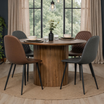
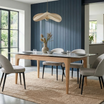
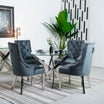
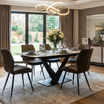
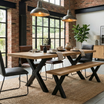

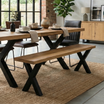



In 2026, round dining tables are experiencing a major resurgence across British homes. Their soft curves, sociable layout and space-efficient design make them ideal for everything from compact city flats to spacious open-plan kitchens. Whether you’re searching for modern round dining tables, rustic charm or practical solutions for smaller rooms, this comprehensive buying guide from FW Homestores will help you make an informed choice.
Round tables have a rich heritage. The legendary King Arthur’s Round Table symbolised equality and open conversation – a principle that still holds true today. The first patented extending round table was created by the English firm Johnstone, Jupe & Company around 1840, proving Britain’s long love affair with circular designs. Today, with a focus on sustainability, organic shapes and warm natural materials, round dining tables are back at the forefront of interior trends.
Round tables have a rich heritage. The legendary King Arthur’s Round Table symbolised equality and open conversation – a principle that still holds true today. The first patented extending round table was created by the English firm Johnstone, Jupe & Company around 1840, proving Britain’s long love affair with circular designs. Today, with a focus on sustainability, organic shapes and warm natural materials, round dining tables are back at the forefront of interior trends.
Understanding Round Table Sizes
Getting the size right is the most critical decision. A well-proportioned round table enhances flow and comfort, while the wrong size can make a room feel cramped or empty.
Standard guidelines for round table diameters (measured in centimetres):
Standard guidelines for round table diameters (measured in centimetres):
- 4 seater: 100–120 cm diameter
- 6 seater: 120–150 cm diameter
- 8 seater: 150–180 cm diameter
- 10 seater: 180–200 cm+ diameter (often extendable)
Allow at least 90 cm of clearance around the entire table for chairs to be pulled out comfortably and for people to move freely. Each diner needs approximately 60–75 cm of table edge space for elbow room.
Small vs Large Round Dining Tables

Small round tables (under 120 cm) are perfect for intimate dinners or apartments. They create a cosy, conversational atmosphere without dominating the room. Large round tables (150 cm+) suit bigger families or frequent entertainers, offering a luxurious, generous feel. The key is balance: a larger table with fewer people seated can feel more opulent than squeezing six around a smaller one.
Choosing the Right Size for Your Space
Measure your dining area carefully. Mark out the table diameter plus 90 cm clearance on the floor with masking tape – this simple trick prevents costly mistakes. In open-plan kitchens, choose a table that complements rather than competes with kitchen units. For rectangular rooms, a round table softens hard angles beautifully.
Round Table vs Square Table: Which is Right for You?

Round tables promote equality – no “head” of the table – and are safer for children with no sharp corners. They also maximise legroom when paired with a pedestal base. Square tables, however, offer more surface area for serving platters and fit neatly into corners. If your room is square or you prefer a more formal layout, a square table may suit better. For most modern UK homes, round wins for flow and sociability.
Advantages of Round Tables
- Sociable design: Everyone can see and speak to each other easily.
- Space-efficient: No corners mean better traffic flow in small or awkward rooms.
- Family-friendly: Safer for toddlers and easier to add an extra chair.
- Versatile styling: Works beautifully with benches (though less common) or mixed chair styles.
- Visual softness: Curves create a relaxed, welcoming focal point.
Disadvantages of Round Tables
- Slightly less surface area than a square table of similar overall dimensions.
- Can feel too intimate for very large groups (over 8–10 people).
- Not ideal with dining benches due to the curved edge.
- Larger models (over 180 cm) require more floor space than you might expect.
Modern Round Dining Tables: Style and Trends

2026 trends favour organic, sculptural shapes, warm woods, and tactile finishes. Expect to see more lacquered tops, mixed materials and gently curved legs inspired by mid-century and postmodern design. Sustainable oak, walnut and reclaimed timber lead the way, paired with matt or high-gloss finishes for contrast. Extendable round tables remain hugely popular for flexible living.
Popular Styles and Designs
- Scandi minimal: Pale oak with slim tapered legs.
- Industrial modern: Metal bases with marble or ceramic tops.
- Contemporary glam: High-gloss white or black with chrome accents.
- Organic luxury: Freeform edges and sculptural bases in natural stone or wood.
Integrating Modern Round Tables in Dining Room Decor
Pair your table with a large round rug to define the zone and add texture. Statement pendant lighting centred above creates drama, while layered textiles – linen napkins, velvet chairs – bring warmth. In open-plan spaces, choose a table that echoes kitchen cabinetry tones for seamless flow.
Round Dining Tables for Small Spaces
Round dining tables for small spaces are one of the smartest choices available. Their compact footprint and curved edges prevent the “boxed-in” feeling often caused by rectangular tables. A 100–120 cm pedestal-base model can seat four comfortably while leaving generous walkways.
Space-Saving Solutions
Look for drop-leaf or extending models that stay compact daily but expand for guests. Pedestal bases maximise legroom, and slim-profile chairs tuck neatly underneath. In studio flats or kitchen-diners, a round table can double as a workspace or breakfast bar.
Best Arrangements for Small Areas
 Position the table slightly off-centre to improve circulation. Use wall-mounted mirrors to bounce light and create the illusion of space. Vertical storage – floating shelves or slim sideboards – keeps the floor area clear.
Enhancing Your Table: Round Table Centerpiece Ideas
A well-chosen centrepiece elevates the entire dining experience without obstructing conversation.
Seasonal Centerpieces
Spring: Fresh tulips in a low ceramic vase.
Summer: Citrus fruits in a glass bowl with greenery.
Autumn: Mini pumpkins, dried leaves and candles.
Winter: Pine cones, metallic baubles and fairy lights.
Everyday Accents
A simple tray with candles, a small plant and coasters creates effortless style. Keep height under 30 cm so guests can see each other easily.
Seasonal Centerpieces
Spring: Fresh tulips in a low ceramic vase.
Summer: Citrus fruits in a glass bowl with greenery.
Autumn: Mini pumpkins, dried leaves and candles.
Winter: Pine cones, metallic baubles and fairy lights.
Everyday Accents
A simple tray with candles, a small plant and coasters creates effortless style. Keep height under 30 cm so guests can see each other easily.
Choosing the Best Materials for Dining Tables
Wood vs Glass vs Metal
- Solid wood (oak, walnut, mango): Timeless, warm and repairable. Hard-wearing for family life.
- Glass: Creates an airy, modern feel and reflects light in smaller rooms. Requires more cleaning.
- Metal (with wood or marble top): Industrial edge, extremely durable and easy to wipe clean.
Durability and Maintenance
Wood benefits from occasional oiling or waxing. Glass and ceramic tops are heat- and stain-resistant but can chip. Metal is virtually maintenance-free but may show fingerprints. Always use coasters and placemats to protect surfaces.
Rustic Round Dining Tables: Adding Charm to Your Home

Rustic round dining tables bring countryside warmth to contemporary homes. Distressed finishes, chunky legs and natural grain celebrate imperfection and character.
Characteristics of Rustic Designs
Look for reclaimed timber, hand-turned legs and subtle distressing. These pieces age beautifully and develop a richer patina over time.
Where to Place Rustic Round Tables in Your Decor
Ideal in country kitchens, conservatories or open-plan barn conversions. Pair with mismatched wooden chairs, linen table runners and pendant lights for that effortless farmhouse feel.
At FW Homestores, our curated collection features both modern and rustic round dining tables in a range of sizes and finishes – all selected for British homes and lifestyles.
Whether you need a compact 4-seater for a city apartment or a generous 8-seater extending model for family gatherings, you’ll find quality, style and exceptional value in our stores and online.
Ready to transform your dining space? Browse our full range of round dining tables today at FW Homestores and enjoy expert advice from our friendly team.
At FW Homestores, our curated collection features both modern and rustic round dining tables in a range of sizes and finishes – all selected for British homes and lifestyles.
Whether you need a compact 4-seater for a city apartment or a generous 8-seater extending model for family gatherings, you’ll find quality, style and exceptional value in our stores and online.
Ready to transform your dining space? Browse our full range of round dining tables today at FW Homestores and enjoy expert advice from our friendly team.
FAQs on Round Dining Tables Buying Guide
1. What size round dining table seats 6 people comfortably?
A 120–150 cm diameter table is ideal. Allow 60–75 cm per person and at least 90 cm clearance around the table.
2. Are round dining tables better than square ones for small spaces?
Yes – their curved edges improve flow and make the room feel larger. They are also safer for children and encourage conversation.
3. What materials are best for a family dining table?
Solid wood offers the best balance of durability, beauty and repairability. Ceramic or glass tops are easier to clean but more prone to chipping.
4. How do I choose a round table for an open-plan kitchen?
Opt for a pedestal base or slim-legged design in a finish that complements your kitchen units. Consider an extending model for flexibility.
5. Can I use a round table outdoors?
Absolutely – choose weather-resistant materials such as teak, powder-coated metal or ceramic. Many of our ranges include suitable outdoor options.
A 120–150 cm diameter table is ideal. Allow 60–75 cm per person and at least 90 cm clearance around the table.
2. Are round dining tables better than square ones for small spaces?
Yes – their curved edges improve flow and make the room feel larger. They are also safer for children and encourage conversation.
3. What materials are best for a family dining table?
Solid wood offers the best balance of durability, beauty and repairability. Ceramic or glass tops are easier to clean but more prone to chipping.
4. How do I choose a round table for an open-plan kitchen?
Opt for a pedestal base or slim-legged design in a finish that complements your kitchen units. Consider an extending model for flexibility.
5. Can I use a round table outdoors?
Absolutely – choose weather-resistant materials such as teak, powder-coated metal or ceramic. Many of our ranges include suitable outdoor options.


Leave a comment
This site is protected by hCaptcha and the hCaptcha Privacy Policy and Terms of Service apply.