

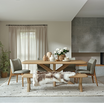
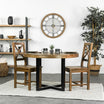
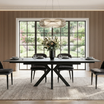
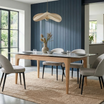


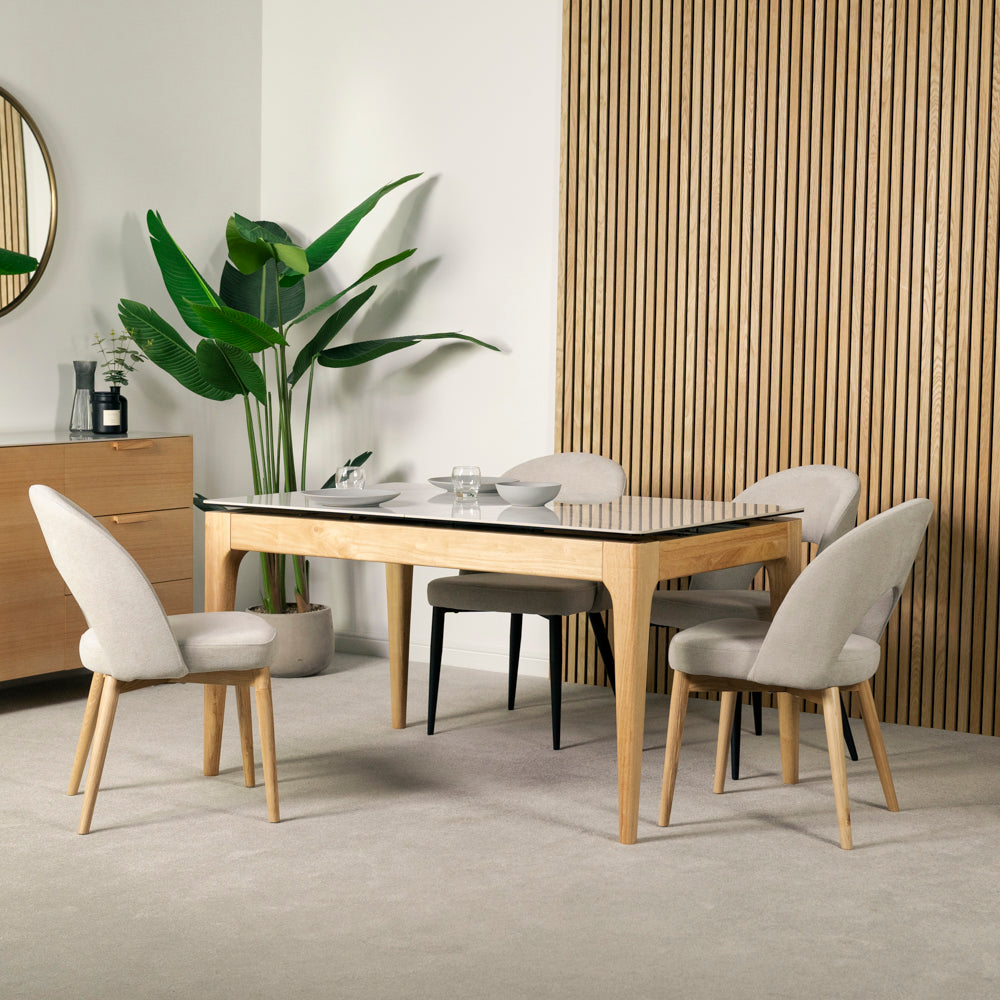
Whether you live in a compact city flat or a sprawling country home, the right dining table can transform the way you use your space. Extendable dining tables have become one of the most practical furniture investments for UK households — offering the flexibility to accommodate an intimate weekday supper for two and a full Sunday roast for ten, all without permanently sacrificing floor space. This buying guide walks you through everything you need to know before choosing your perfect extendable table.
Understanding Extendable Tables
What Are Extendable Tables?
An extendable dining table is a table designed with a mechanism that allows you to increase its surface area when needed, and reduce it again when not in use. Most models include one or more leaves — removable or self-storing panels — that slot into the table to create additional length or width. When the extra space is no longer needed, the table returns to its compact size, making it ideal for everyday living.
Far from a modern invention, extending tables have been a staple of British homes since the Victorian era, when they were a symbol of hospitality and social standing. Today, they are one of the most sought-after pieces of multifunctional furniture on the market, blending form with everyday practicality.
Benefits of Space-Saving Dining Tables

The appeal of an extendable table goes well beyond occasional entertaining. Here is why so many homeowners are choosing them over fixed-size alternatives:
Everyday versatility. A smaller table suits daily meals without making a modest dining room feel cluttered. Extend it for dinner parties, family gatherings, or the festive season.
Economical use of space. For anyone navigating small space dining — such as open-plan kitchen-diners or compact Victorian terraces — an extendable table is often the single smartest furniture choice you can make.
Long-term value. Rather than replacing your table as your household grows or shrinks, an extendable design adapts with you. It is furniture that works harder for longer.
Reduced visual clutter. In its compact form, an extendable table keeps sight lines open and rooms feeling airy — particularly important in smaller British homes where square footage is precious.
Types of Extendable Tables
The shape of your extendable table will largely determine how it functions in your space. Each format has its own strengths.
Round Extendable Tables

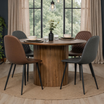
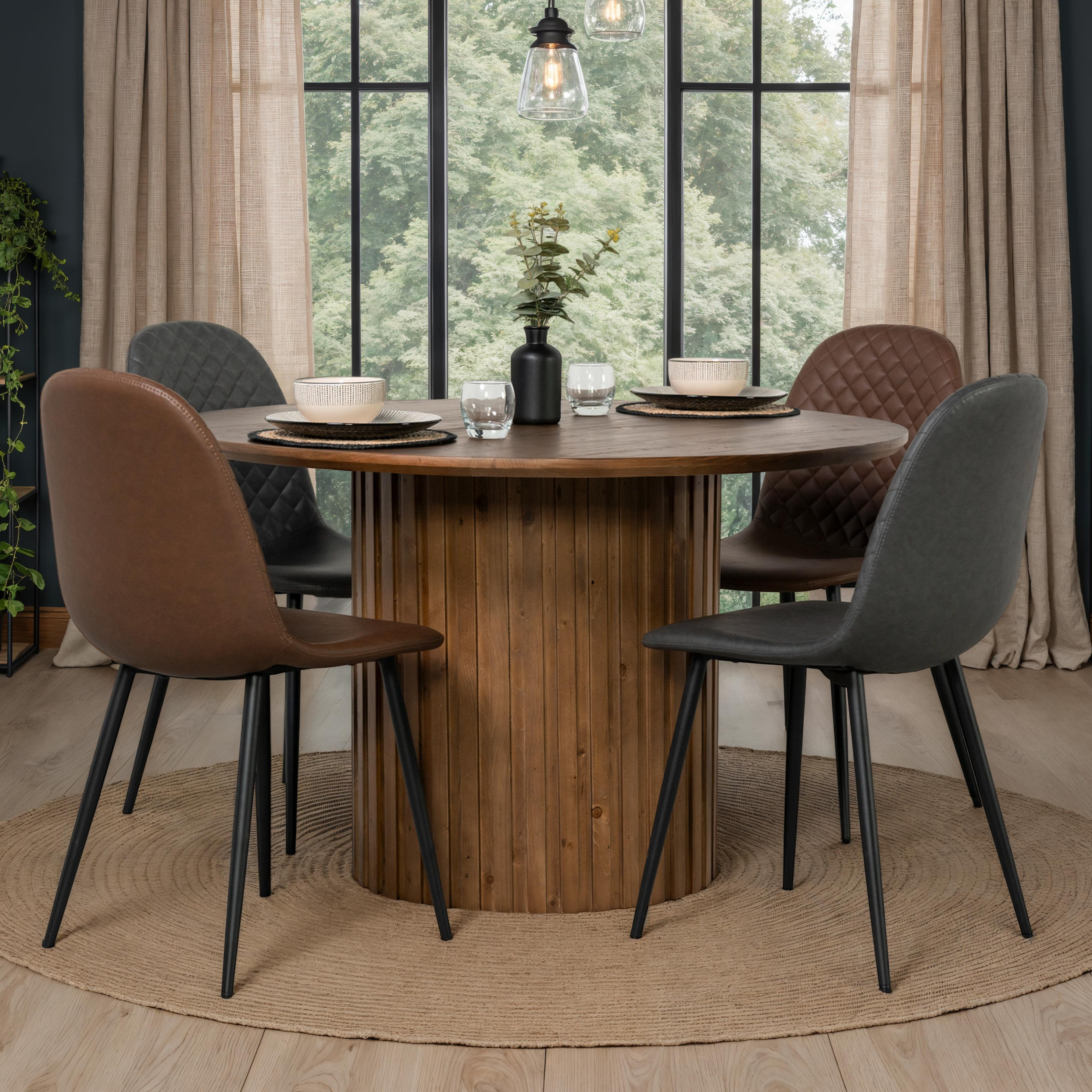
Round extendable tables are an elegant choice for smaller rooms or for households that prioritise conversation at the table. With no sharp corners, they are also a practical option for families with young children. When extended, many circular models become oval — maintaining that sense of flow whilst comfortably adding extra seating. They work particularly well in square-shaped dining rooms where a rectangular table might feel out of proportion.
Rectangular Extendable Tables

The rectangular format is the most popular choice in the UK, and for good reason. It slots naturally against a wall in smaller rooms, scales gracefully in larger spaces, and offers the most seating capacity when fully extended. If your priority is hosting large gatherings, a rectangular extendable table will almost always be the most practical option. They suit everything from narrow kitchen-diners to formal dining rooms.
Square Extendable Tables

Square extendable tables offer a pleasing symmetry that suits square rooms and open-plan spaces equally well. When extended, they typically transform into a rectangular format. They are especially effective in rooms where multiple access points make a round or rectangular shape impractical. A square extendable table can feel refreshingly different from the standard rectangular dining set whilst delivering the same flexibility.
Mechanisms of Extendable Tables
Understanding how a table extends is just as important as understanding what it looks like. The mechanism affects ease of use, the table's stability when extended, and how practical it is in everyday life.
Extendable Table Mechanisms Explained

There are several key extension mechanisms available across different dining table designs:
Butterfly leaf mechanism. One of the most convenient options, the butterfly leaf is self-storing within the table frame. The two halves of the table slide apart and the leaf unfolds from within. No separate storage is required, making it particularly useful where space is limited.
Drop-in leaf. This is the most traditional mechanism. The table pulls apart at the centre and a separate leaf is inserted manually. The leaf must be stored elsewhere when not in use — often under a bed or in a cupboard. It is a robust, time-tested design but requires a little more effort.
Draw-leaf (or pull-out) mechanism. Leaves are hidden beneath the main table surface and pull out from either end. This is an elegant, fuss-free system that requires no additional storage. Draw-leaf tables tend to have a slightly lower final height on the extended ends, which is worth considering when pairing with chairs.
Folding or drop-leaf mechanism. The table has hinged sections that fold down when not in use and lift into place when extra seating is needed. These are particularly suited to very small spaces, as the table's everyday footprint can be dramatically reduced.
Best Mechanisms for Small Spaces
For compact dining areas, the butterfly leaf and draw-leaf mechanisms are generally the most practical. Both eliminate the need to store a separate leaf, which is a real advantage in homes where storage is already at a premium. The butterfly mechanism is especially well-suited to kitchen-diners where the table is used frequently and convenience is paramount.
Dining Table Styles and Designs

Once you have settled on a shape and mechanism, style becomes the deciding factor. The market for extendable dining tables spans a broad range of aesthetics, so whether your home is contemporary or classic, there is a table to suit.
Modern Dining Table Designs
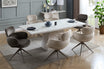
Contemporary extendable tables favour clean lines, minimal ornamentation, and a pared-back palette. Common materials include tempered glass, brushed metal, lacquered MDF, and pale-toned engineered timbers such as oak veneer or ash. In open-plan spaces, a glass-topped extendable table can help a room feel larger by allowing light to travel freely through the space. Modern designs often emphasise the mechanism itself as a design feature, with smooth, visible extension hardware that signals craftsmanship rather than concealing it.
Traditional Dining Table Styles
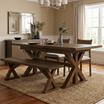
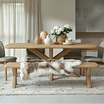
For homes that favour heritage character, traditional extendable tables in solid oak, pine, or walnut remain perennial favourites. Turned legs, painted finishes in muted earth tones, and richly grained timber tops all speak to a distinctly British aesthetic. These tables are often built to last generations, developing a patina over time that adds rather than detracts from their character. Farmhouse-style and Shaker-inspired designs are particularly popular choices for period properties and country homes.
Multifunctional Furniture as Dining Solutions
The extendable dining table sits at the heart of a broader trend towards multifunctional furniture — pieces that serve more than one purpose and adapt to how modern households actually live. In many UK homes, the dining table also doubles as a home office desk, a homework station for children, a crafting surface, and an occasional buffet during gatherings.
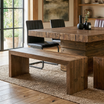
Choosing a table with a sturdy, scratch-resistant surface, adequate everyday dimensions, and a smooth extension mechanism means it can shift between all these roles without compromise. Some models pair with matching benches or stacking chairs, further reducing the space required when the table is in its compact form. Others are designed with built-in storage drawers — ideal for keeping essentials close to hand in a kitchen-diner.
Choosing the Right Table for Your Space

Assessing Small Space Dining Needs
Before you begin browsing, think honestly about how you will use the table day to day. How many people live in your household? How often do you host? Is the dining area a dedicated room, or does it share space with the kitchen or living room? The answers will guide you towards the right base size and extension capacity.
As a general rule, allow a minimum of 60cm of table width per seated person for comfortable dining. For the space around the table, aim for at least 90cm between the table edge and the wall or nearest piece of furniture — this allows chairs to be pulled out freely and people to move around without squeezing.
Measuring and Planning Your Space
Before purchasing, measure your dining area carefully. Record both the room dimensions and the position of doorways, radiators, and light fittings — all of which can affect where a table can practically sit. Then measure your desired table in both its compact and extended states. If the room cannot comfortably accommodate the table when fully extended, consider whether a slightly smaller model would better serve your needs.
A useful exercise is to use masking tape or newspaper on the floor to map out the table's footprint at each size. This simple step can prevent the common mistake of purchasing a table that overwhelms a room when extended.
Tips for Blending with Existing Décor

An extendable table does not need to match your existing furniture exactly — but it should feel cohesive. Consider the dominant materials and tones already present in the room. A pale oak table pairs naturally with neutral linen upholstery and natural-fibre flooring. A dark walnut design grounds a room with warmer tones and richer textiles. If your dining chairs are a strong statement piece, opt for a table with quieter lines that allows the chairs to take centre stage.
Finally, consider the finish. Matte surfaces tend to feel more contemporary and are more forgiving of everyday marks and fingerprints. Lacquered or polished finishes create a more formal, reflective surface that suits traditional interiors but requires more careful upkeep.
Conclusion: Finding the Perfect Extendable Dining Table
An extendable dining table is one of the most intelligent investments you can make for your home. It solves the perennial dilemma of wanting a generous dining space for entertaining without sacrificing your everyday living room to a table that is too large for daily use. Whether you are drawn to the warmth of a traditional solid oak design, the crisp lines of a modern glass and metal table, or the understated practicality of a butterfly-leaf design in a painted finish, the right table is one that works as hard as you do — every single day.
At FW Homestores, our collection of extendable dining tables spans a wide range of styles, mechanisms, and materials, all chosen with British homes and British living in mind. Browse in store or online to discover a table that grows with your life.
Frequently Asked Questions
Q: What is the most practical extension mechanism for everyday use?
A: For ease of use, butterfly leaf and draw-leaf mechanisms are the most practical choices. Both store the extension panel within or beneath the table itself, meaning there is nothing extra to find space for. If you extend and contract your table frequently, these designs will save you considerable time and effort.
Q: How much space do I need around an extendable dining table?
A: As a guide, allow at least 90cm between the edge of the table and the nearest wall or piece of furniture. This ensures chairs can be pulled out comfortably and people can move around the table without squeezing. When the table is fully extended, verify this clearance is still achievable before purchasing.
Q: Are round extendable tables as practical as rectangular ones?
A: Round extendable tables are highly practical, particularly in square rooms or for smaller households. They tend to extend into an oval shape, which can seat more people whilst maintaining the softer feel of the original design. They do, however, offer slightly less total seating capacity than an equivalent rectangular table when fully extended.
Q: What materials are best for a family dining table?
A: For busy family households, solid timber tables in oak or pine are excellent choices — they are robust, repairable, and improve with age. If you prefer a contemporary look, a table with a lacquered or laminate top offers good scratch and stain resistance. Whichever material you choose, a matte or oiled finish will be more forgiving of everyday knocks and marks than a high-gloss alternative.
Q: Can I mix an extendable dining table with mismatched chairs?
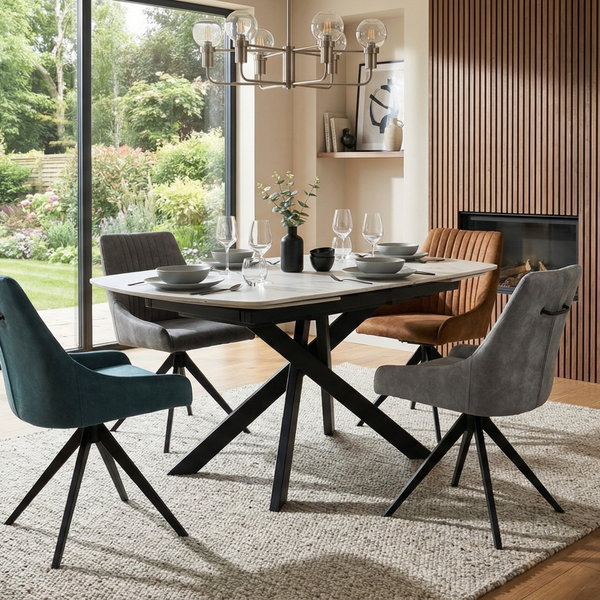
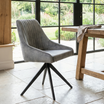
A: Absolutely. In fact, mixing chair styles has become one of the most popular trends in British dining room design. A simple, well-proportioned extendable table in a neutral finish provides an excellent backdrop for a mix of upholstered chairs, wooden bistro chairs, or a combination of a bench and individual seats. The key is to maintain a degree of cohesion — through consistent colour tones or materials — so the overall look feels intentional rather than accidental.

Leave a comment
This site is protected by hCaptcha and the hCaptcha Privacy Policy and Terms of Service apply.