
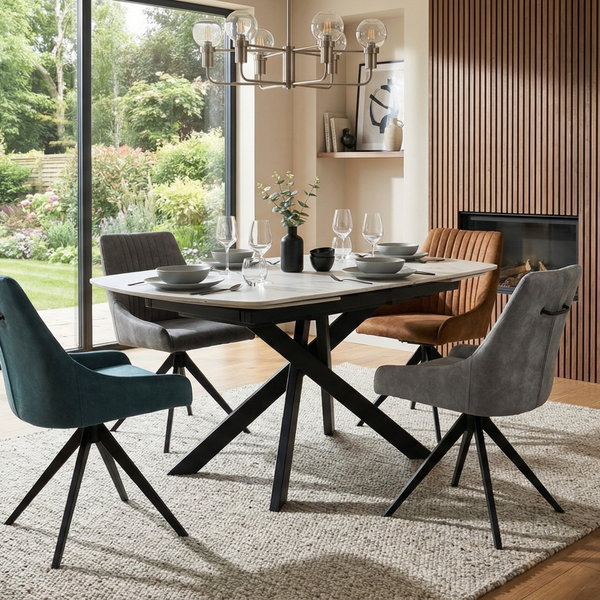























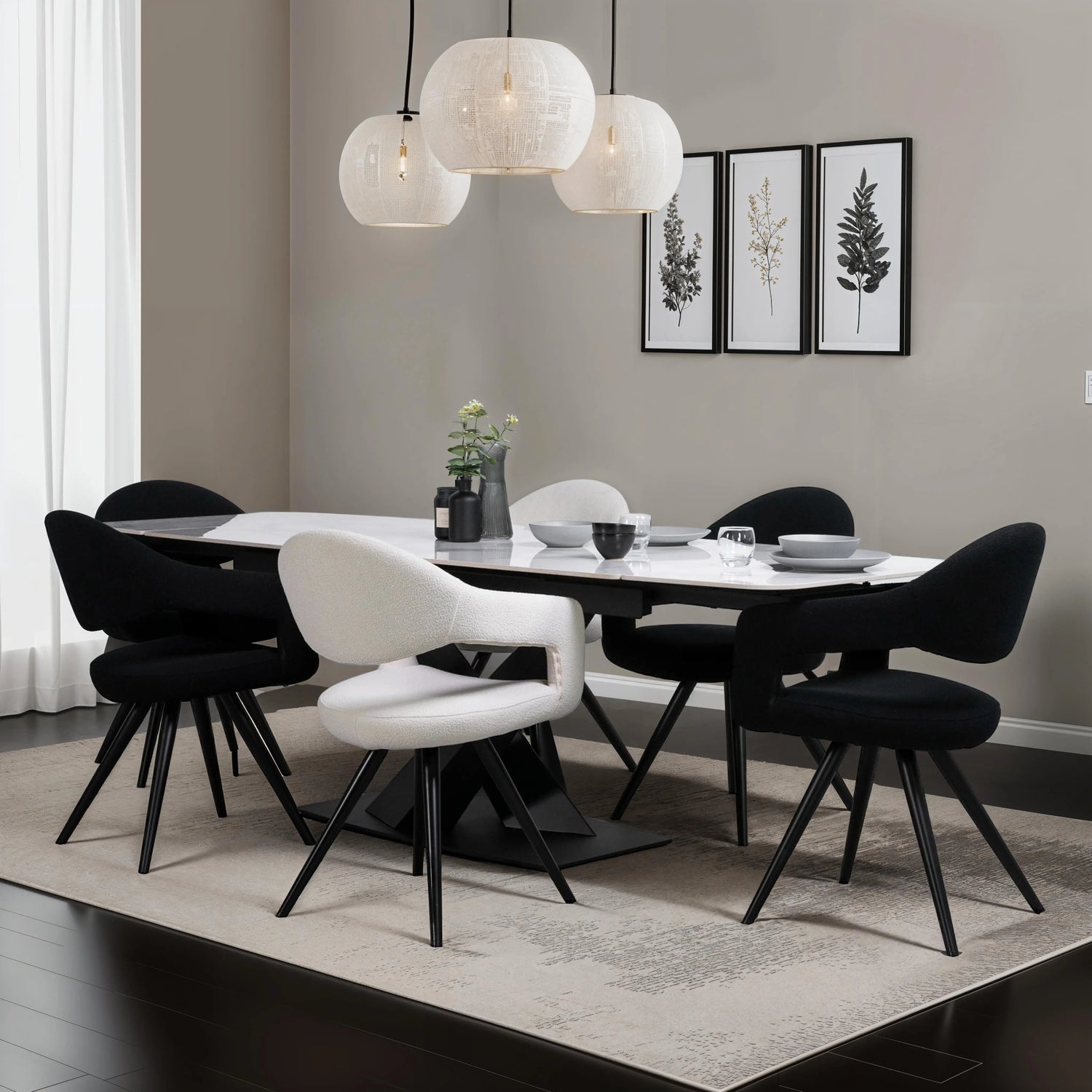
Picture a lively dinner party where a careless gesture sends a glass of red wine tumbling across your pristine new centrepiece. Panic instantly sets in, highlighting the ultimate dilemma in home design: choosing between aesthetic prestige and daily durability. In the debate of ceramic dining tables vs marble dining tables, surviving that exact moment of panic often becomes the deciding factor.
To understand why some spills become permanent disasters, we must examine how these materials are made. Marble is a beautiful natural limestone product, but it harbours a hidden enemy known as porosity. Furniture experts explain that porous surfaces act like microscopic sponges, soaking up liquids until they leave a permanent stain. Conversely, modern ceramic is a high-tech "sintered stone" surface—meaning it is baked under intense pressure in a factory to mimic the earth's natural stone-making process, resulting in a completely non-porous finish.
Finding the perfect dining room furniture ultimately comes down to matching a material to your daily habits. Rather than declaring one universal winner, evaluating ceramic vs marble dining tables using a practical 5-point comparison framework reveals which beautiful surface truly fits how you live.
Unique Veining vs. High-Definition Consistency: How to Pick the Look that Matches Your Style
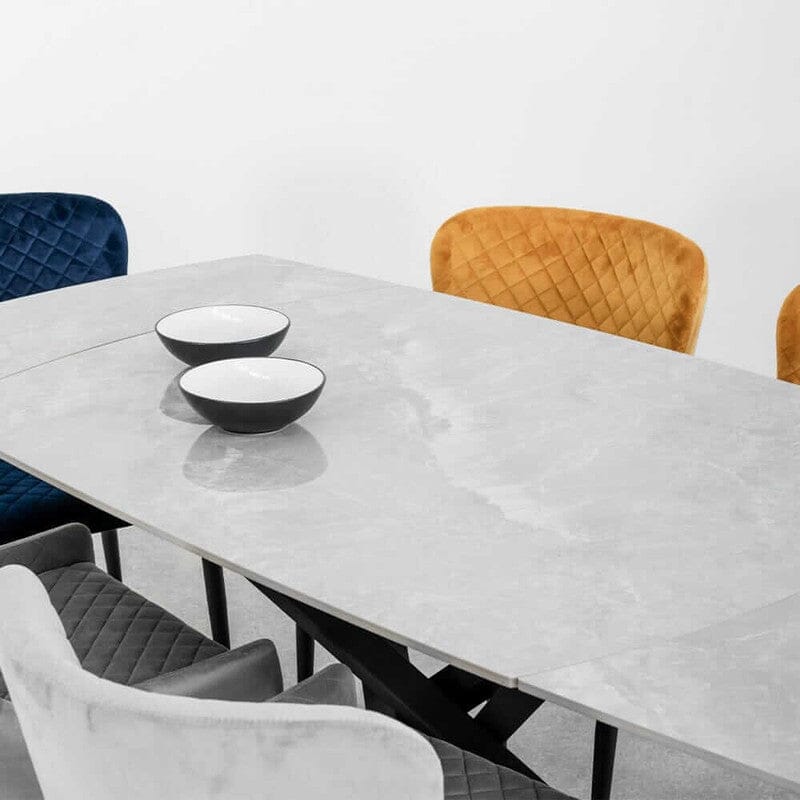
While both materials can easily fool your dinner guests from afar, stepping up close reveals the true aesthetic differences in tabletop veining. Marble dining tables offer a unique, translucent depth because the stone formed slowly over millions of years. Every sweeping grey line is a one-of-a-kind fingerprint. However, weighing the pros and cons of natural stone furniture means accepting this unpredictability; finding exact colour matches for an expanding table leaf or a nearby sideboard can be a frustrating hunt.
Modern ceramic solves this unpredictability through sintering—essentially acting like nature in a pressure cooker. Factories compress natural minerals under intense heat and pressure, then use advanced digital slab printing to apply high-definition marble patterns directly onto the surface. This guarantees perfect consistency, meaning you can easily match a large dining set. Just keep in mind that basic printed designs sit only on the surface. If a heavy pan chips the edge, you might see a plain core underneath, which is why investing in premium "full-body" ceramic—where the colour runs through the entire slab—is highly recommended.
Deciding between mother nature’s unique artistry and manufactured precision sets the visual mood for your dining space. Once that gorgeous centrepiece actually arrives, its aesthetics immediately take a backseat to its porosity—the factor that ultimately determines your daily cleaning routine and how well it survives domestic disasters.
From Red Wine to Lemon Juice: Why Porosity Determines Your Cleaning Routine
Imagine spending a dinner party watching your guests' wine glasses like a hawk. Natural marble is highly porous—acting like a microscopic sponge—so mastering a strict 10-second rule for wiping up spills is essential. Additionally, calcium-based stones possess severe chemical sensitivity. A drop of citrus causes "etching"—a chemical reaction leaving permanent dull, chalky spots. Knowing how to prevent marble table etching means relying on coasters and exercising extreme caution when cleaning acidic spills on stone.
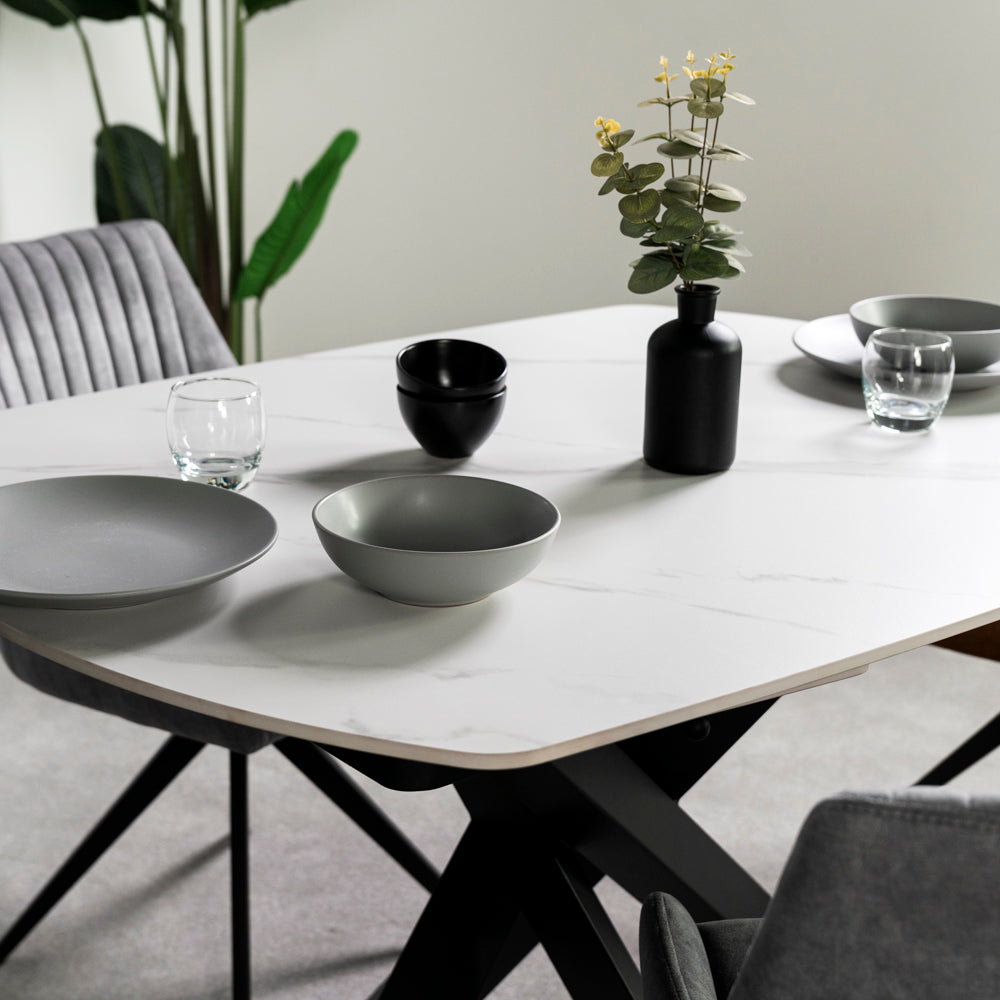
Engineered ceramic offers total peace of mind because its high-heat manufacturing makes it completely waterproof. As one of the premier non-porous dining table materials, liquids physically cannot penetrate its surface. This stain resistance of porcelain tabletops means you need zero specialized cleaners; basic washing-up liquid works perfectly. Blocking moisture also blocks bacteria, making the table naturally more hygienic for rolling out pizza dough. Consider how quickly you must react to common household spills:
-
Red Wine: Marble requires immediate rescue (under 10 seconds); Ceramic wipes clean effortlessly, even hours later.
-
Lemon Juice: Marble etches instantly upon contact; Ceramic ignores the acid completely.
-
Coffee: Marble absorbs dark pigments rapidly; Ceramic entirely repels the liquid.
-
Olive Oil: Marble draws grease deep into its pores; Ceramic keeps the oil pooled harmlessly on top.
Surviving a knocked-over Cabernet is only half the battle of daily dining; tabletops must also withstand the physical stressors and sharp edges of an active family life.
The 'Pizza Box' and 'Key Scratch' Test: Comparing Surface Hardness for Active Households
Everyday life is full of sharp edges, from tossed house keys to errant steak knives. To measure how well tabletops resist these daily threats, experts use the Mohs scale of mineral hardness—a simple 1 to 10 ranking where higher numbers scratch lower ones. Natural marble is surprisingly soft, explaining why it gathers fine scratches over years of use. Alternatively, the exceptional durability of sintered stone surfaces makes them virtually immune to standard blades. For anyone seeking the best dining table for families with children, these everyday rankings are eye-opening:
-
Marble: 3 to 4 (Easily scratched by metal)
-
Steel Knives and Keys: 5.5 to 6 (Common household hazards)
-
Ceramic: 7 to 8 (Scratch resistant modern dining furniture)
-
Diamond: 10 (Maximum hardness)
Beyond sharp objects, your table frequently faces extreme temperatures and heavy cookware. Because engineered ceramic is baked at volcanic heat during manufacturing, you can place a hot roasting pan directly on it. Conversely, setting hot items on marble risks "thermal shock"—a rapid temperature swing that causes natural stone to suddenly crack or scorch. Yet, you must also weigh the impact resistance of ceramic surfaces. While ceramic ignores heat, dropping a heavy mug hard on its edge might chip it, whereas softer marble would likely just dent.
Understanding these physical boundaries helps prevent accidental damage during a chaotic family dinner. Protecting your investment long-term, however, involves calculating the hidden time costs of ongoing luxury surface maintenance.
Sealing vs. Set-and-Forget: Calculating the Hidden Time Cost of Luxury Surfaces
Owning a showstopping centrepiece often comes with an invisible chore chart. Because marble is naturally porous, maintaining luxury dining table finishes requires applying a hydrophobic sealant—a specialized liquid coating that repels spills. You can verify your table's protection using the quick "water bead test." Simply sprinkle water on the surface; if it forms tight domes, your seal is strong, but if the water flattens and darkens the stone, you must reapply.
By contrast, ceramic provides a completely "set-and-forget" lifestyle. Since it is manufactured to be perfectly non-porous, you will never spend your weekends sealing natural stone dining surfaces or budgeting for annual maintenance products. This reality saves both time and money, allowing you to wipe away acidic tomato sauce or red wine with just a damp cloth and total peace of mind.
Damage repair, however, flips this convenience upside down. When repairing chipped table edges, softer marble often allows for affordable DIY buffing and minor filling. Conversely, chipping an ultra-hard ceramic edge almost always requires expensive professional refinishing. After weighing these daily care routines, you must also consider the physical challenge of getting the furniture inside, as material weight and density heavily influence your room's layout and installation logistics.
Moving Day Realities: How Material Weight and Density Affect Your Room's Layout

Purchasing beautiful dining room furniture often leads to a rude awakening when the delivery van actually arrives. Natural marble is incredibly heavy, requiring serious muscle to manoeuvre safely through tight doorways or up staircases. Because of its high structural density—how tightly packed the earth made its minerals—marble must be cut quite thick to avoid cracking under its own massive weight.
Modern engineering completely changes this slab thickness ratio. Factory pressing makes ceramic so exceptionally strong that a sleek, thin profile delivers the exact same stability as a chunky piece of natural stone. When reviewing a weight comparison of tabletop materials for a standard 6-seater, the physical difference is striking:
-
Marble (20mm thick): Approximately 90–115 kg (200–250 lbs).
-
Ceramic (12mm thick): Approximately 35–45 kg (80–100 lbs).
Planning around these logistical numbers ensures a safe delivery and prevents property damage. Massive marble requires heavily reinforced bases and can even test floor-load limits in older houses, while lighter ceramic offers effortless placement flexibility for your final room design.
Making the Final Choice: Which Table Fits Your Lifestyle?
You no longer just see a beautiful surface; you now understand the daily reality of these materials. When comparing ceramic vs marble dining tables, the true winner simply depends on your household. Ceramic is the functional champion for busy families needing a worry-free, spill-proof gathering space. Conversely, marble remains the ultimate statement for those who cherish natural history and prestige.
Finalize your choice with a quick lifestyle audit: Are you willing to use coasters religiously, do your dinners involve messy guests, and do you prefer pristine perfection over a natural patina? While modern ceramic offers unbeatable daily durability and an excellent initial investment, the long-term value of marble furniture lies in its timeless luxury and ability to become a cherished heirloom.
Armed with this clarity, you can confidently step into a furniture showroom. Instead of simply hoping a table survives your lifestyle, you are ready to evaluate textures and ask smart questions about maintenance. Choose the surface that genuinely fits your daily rhythm, allowing you to finally focus on enjoying your meals rather than guarding your furniture.

Leave a comment
This site is protected by hCaptcha and the hCaptcha Privacy Policy and Terms of Service apply.