








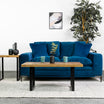
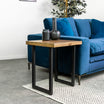
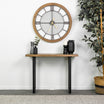
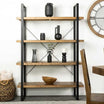
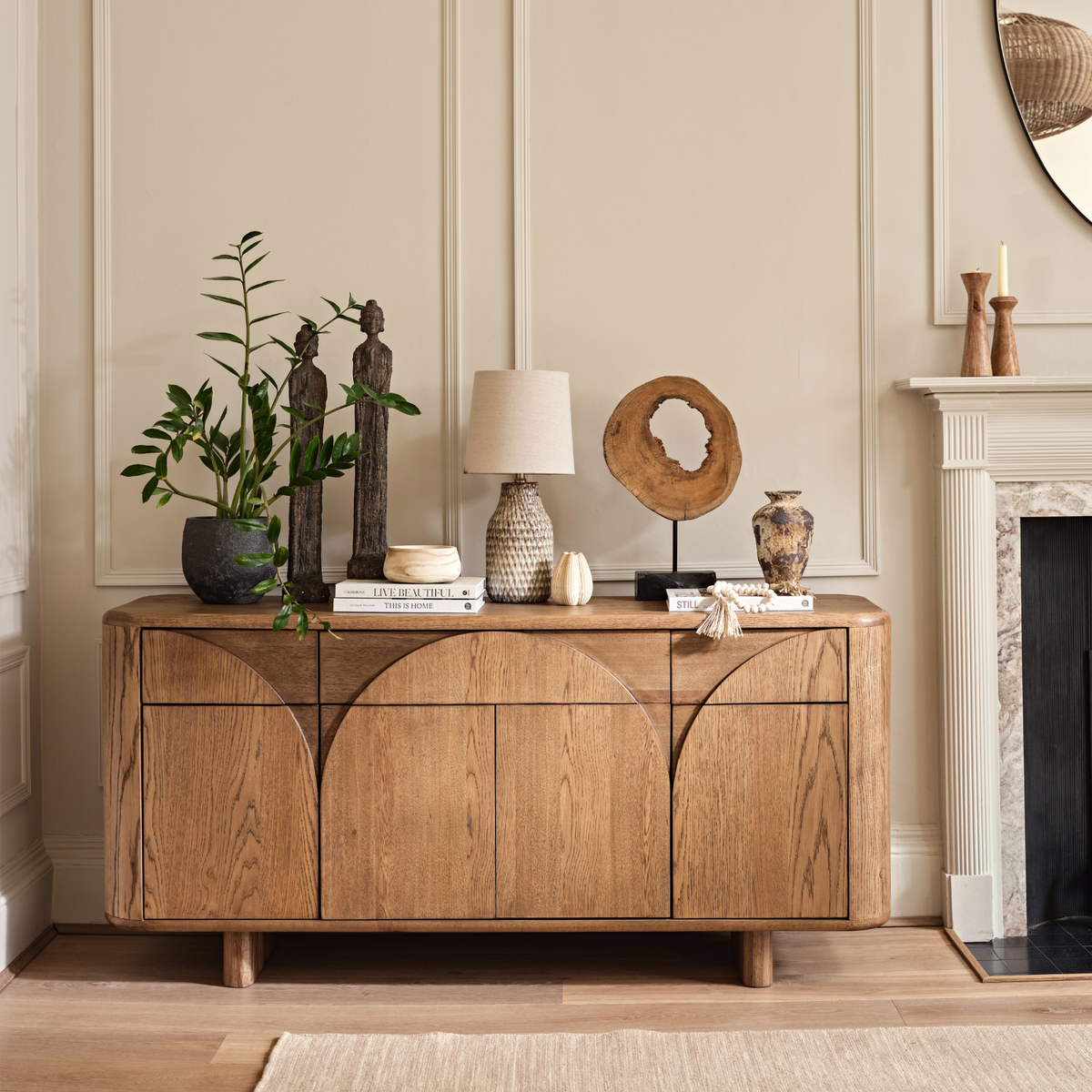
A sideboard is one of the most useful pieces of furniture in a dining room, living room, hallway, or open-plan space. It offers storage below and a display surface above, which makes it ideal for combining beauty with everyday function. The best sideboard decor feels balanced, personal, and practical rather than crowded or overly staged.
Where should you start when styling a sideboard?
Start by deciding what the sideboard needs to do. If it sits in a dining room, it may need to hold serveware, candles, glassware, or linens. If it is in an entryway, it might need a tray for keys, a lamp for soft lighting, and a bowl for daily essentials. Once the function is clear, choose a simple visual direction: calm and minimal, layered and collected, seasonal and expressive, or polished and modern.
Use the ideas below as a flexible formula. You do not need every element at once; the goal is to create a surface that looks intentional while still leaving enough breathing room for real life.
1. Anchor the arrangement with one strong focal point
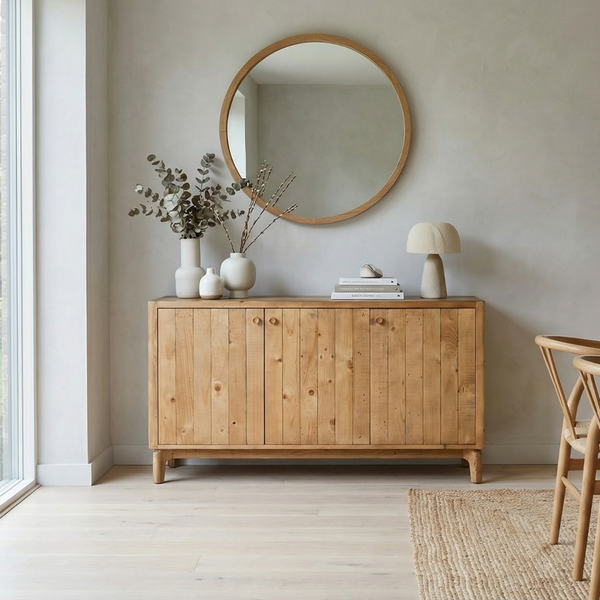
A well-styled sideboard usually begins with a focal point. This could be a large mirror, framed artwork, a sculptural vase, or a pair of oversized lamps. The focal point gives the eye somewhere to land and prevents the display from feeling like a random collection of small objects.
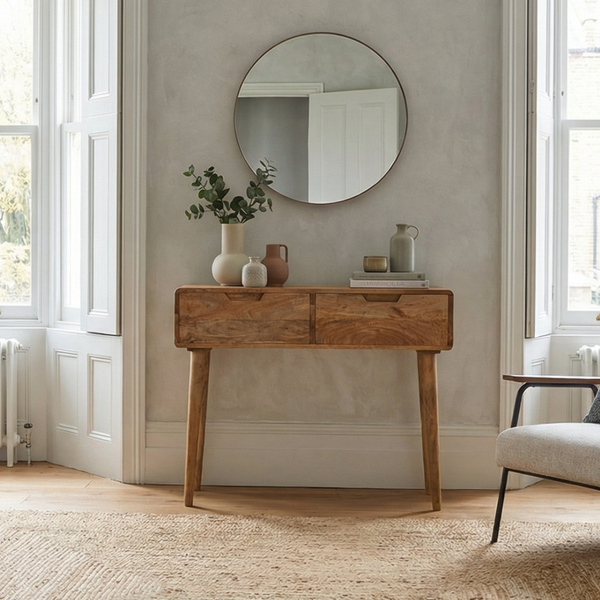
For modern sideboards, a single large piece often works better than several small frames. A round mirror can soften straight cabinet lines, while abstract art can add color and movement. If the sideboard is long, choose a focal point that has enough scale to hold the wall above it.
Good anchor options include:
-
A large mirror centered above the sideboard
-
One oversized artwork leaning against the wall
-
A tall ceramic vase with branches
-
A pair of matching lamps for symmetry
-
A gallery-style grouping kept tight and simple
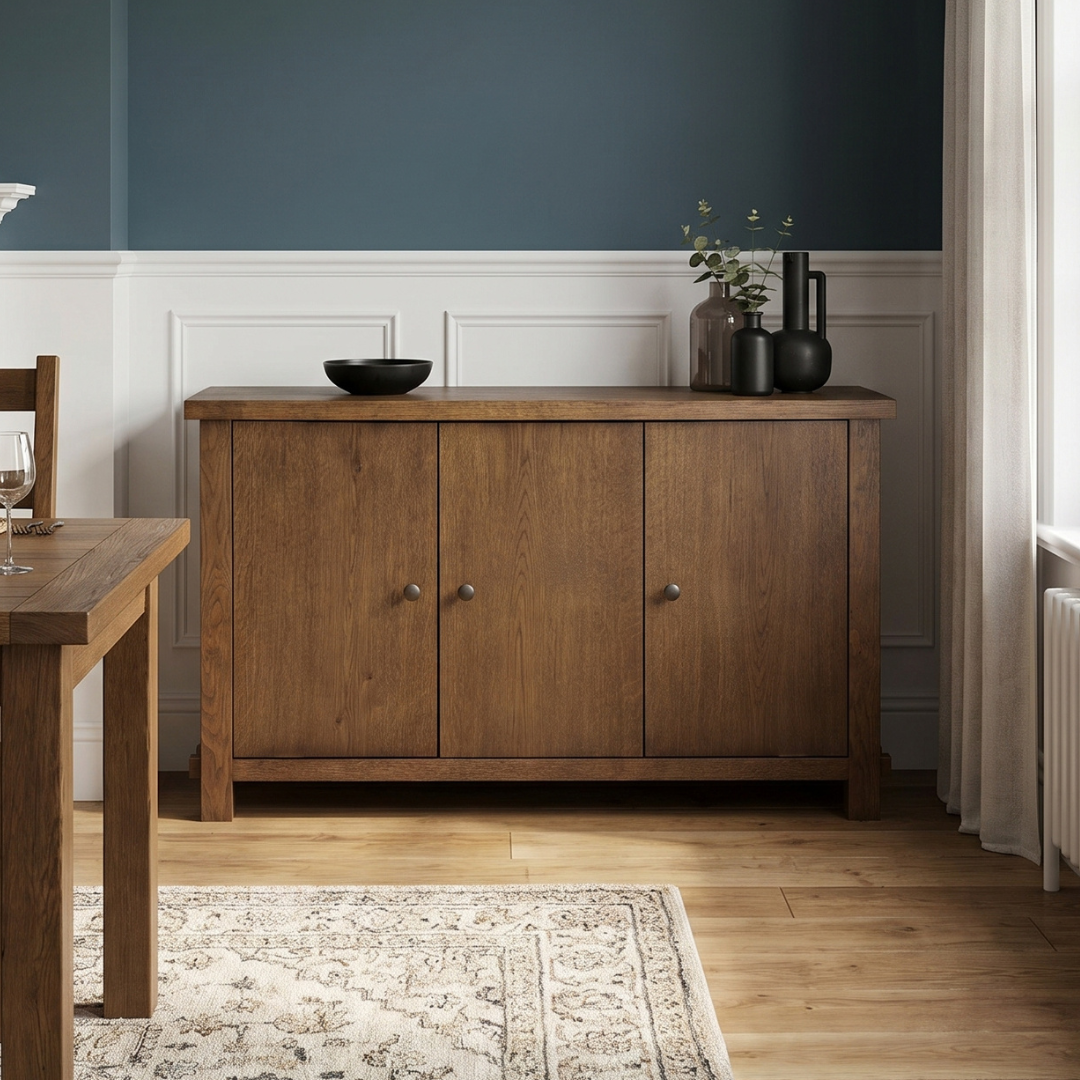
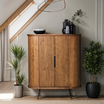
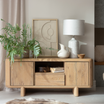
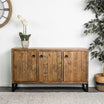
Quebec Oak 3 Door Sideboard
2. Use lighting to add warmth and height
Lighting is one of the easiest ways to make sideboard styling feel finished. A table lamp brings height, glow, and atmosphere, especially in dining rooms and living rooms where overhead lighting can feel harsh. If you have a long sideboard, two lamps can create balance; if the piece is smaller, one lamp placed to one side often looks more relaxed.
Think about the lamp as both a functional item and part of the sideboard decor. A linen shade adds softness, a metal base introduces shine, and a ceramic base brings texture. For evening use, warm bulbs usually create a more inviting mood than cool white light.
If a lamp is not practical, try battery candles, picture lights, wall sconces, or a small rechargeable lamp. The key is to include some form of glow so the display looks appealing after dark, not just in daylight.
3. Create layers with height, depth, and texture
Flat arrangements rarely feel interesting. Layering gives a sideboard dimension by mixing objects of different heights, depths, and finishes. Place taller items at the back, medium pieces in the middle, and smaller objects toward the front so each layer is visible.
Texture matters as much as shape. Pair smooth ceramics with woven baskets, glass with wood, or matte finishes with polished metal. These contrasts help even neutral sideboard styling ideas feel rich rather than plain.
A simple layering formula:
-
Start with a tall item, such as a lamp, vase, or artwork.
-
Add a medium object, such as a bowl, stack of books, or framed photo.
-
Finish with a low accent, such as a candle, tray, or small decorative box.
-
Leave some empty surface so the styling can breathe.
4. Group decor in odd numbers
Decor often looks more natural when grouped in threes or fives. Odd-numbered groupings feel less rigid than pairs, while still creating structure. For example, a vase, candle, and decorative bowl can make a simple trio that looks complete without overwhelming the surface.
Vary the size of each piece within the group. If everything is the same height, the arrangement may look flat. Combine one tall item, one medium item, and one low item for an easy, balanced display.
This approach works particularly well on modern sideboards because it keeps the styling clean. Instead of covering the entire surface, create two or three intentional moments across the top.
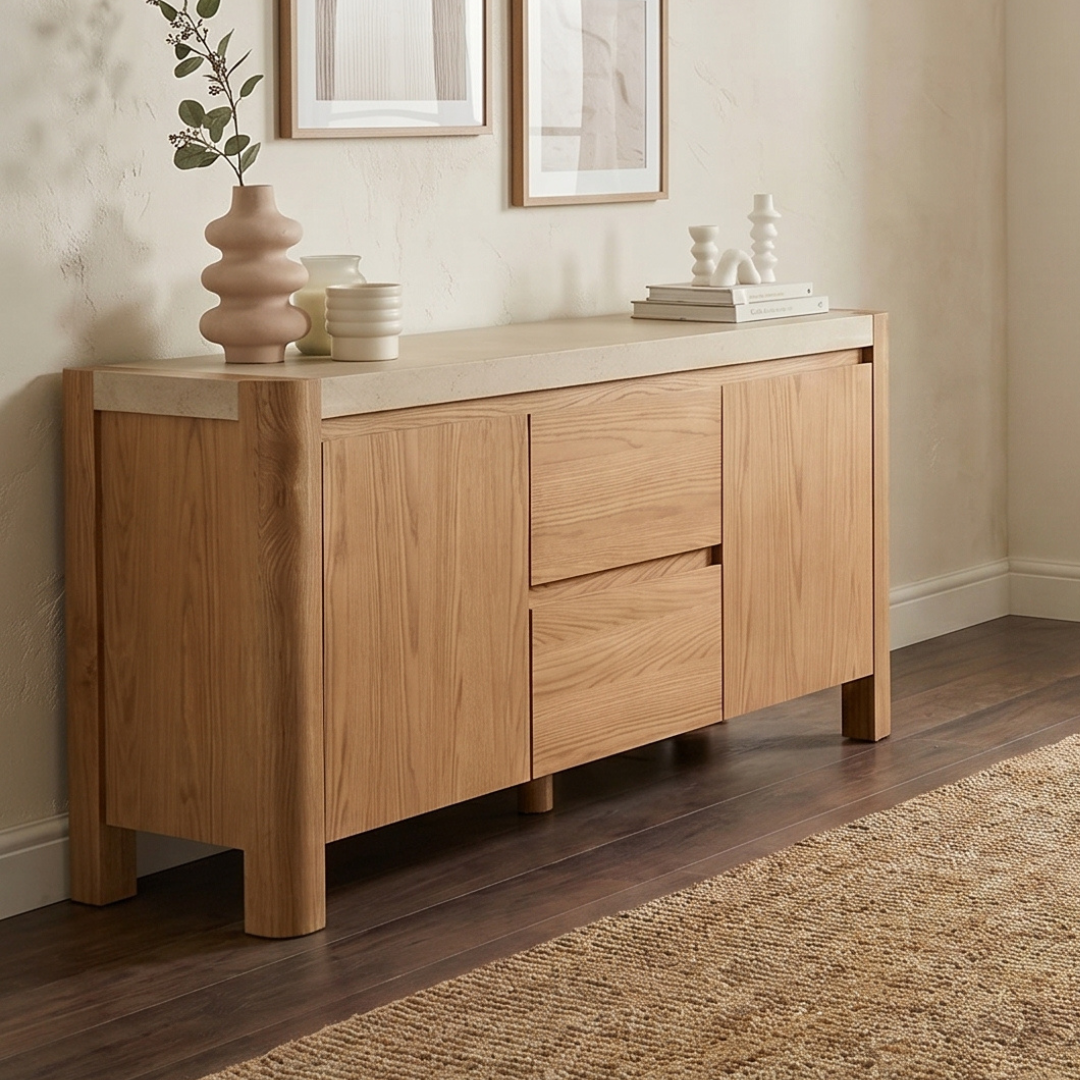
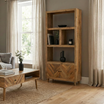
Artemis Wide Sideboard
5. Add functional displays that still look beautiful
A sideboard should not only be decorative. Functional displays are especially useful in dining rooms, kitchens, hallways, and living spaces. The trick is to make practical items look styled by containing them, grouping them, or choosing pieces that match the overall mood.
In a dining room, display a tray with glassware, a carafe, or napkins. In an entryway, use a ceramic dish for keys and a lidded box for small clutter. In a living room, stack coffee table books, store remotes in a decorative box, or keep coasters in a small bowl.
Functional display ideas include:
-
A tray for drinks, candles, or serving pieces
-
A bowl for keys, matches, or wrapped sweets
-
A basket beneath or beside the sideboard for linens
-
A decorative box for remotes, chargers, or stationery
-
A stack of books topped with a small object
When everyday items have a place, the sideboard stays useful without looking messy.
6. Bring in greenery or flowers for softness
Plants, branches, and flowers add life to a sideboard. They break up hard lines and introduce natural color, which is especially helpful if the furniture is sleek, dark, or minimal. Even one vase of foliage can make the whole arrangement feel fresher.
Choose greenery based on the room and your maintenance level. Fresh flowers feel elegant for entertaining, branches create height and drama, and faux stems can work well when chosen carefully. In smaller spaces, a low plant or small vase may be enough.
For a polished look, keep the vessel in proportion to the sideboard. A tiny vase can disappear on a long cabinet, while an oversized arrangement can block artwork or mirrors. Aim for balance, not excess.
7. Style with seasonal displays in a restrained way
Seasonal displays can keep sideboard decor feeling current without requiring a full room refresh. The secret is to edit carefully. Instead of filling the surface with themed objects, change a few accents: foliage, candles, flowers, bowls, or textiles.
In autumn, use branches, warm-toned candles, or a bowl of natural elements. In winter, try evergreen stems, metallic accents, or layered candlelight. In spring, bring in lighter ceramics, fresh flowers, or pastel details. In summer, keep the display airy with glass, greenery, and natural textures.
A good seasonal sideboard still fits the room’s existing style. If your home is minimal, keep seasonal touches subtle. If your style is more layered, use the season to add color and personality while maintaining balance.
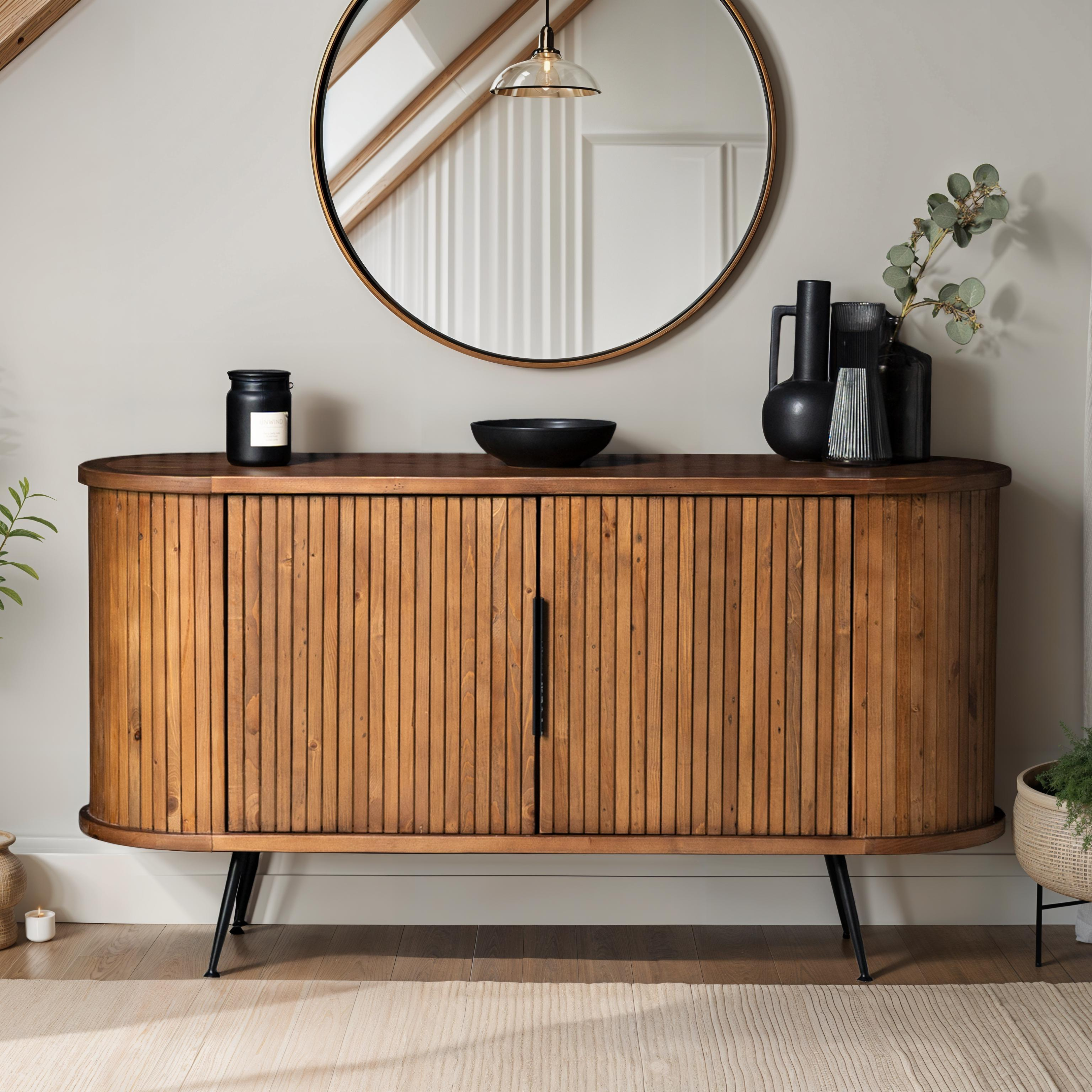
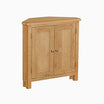
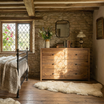
Dakota 2 Door Sideboard
8. Balance symmetry and asymmetry
Symmetry can make a sideboard feel formal and calm. Two matching lamps, twin vases, or evenly spaced artwork can work beautifully in dining rooms or traditional interiors. Asymmetry feels more relaxed and is often ideal for casual living spaces, hallways, and contemporary rooms.
To style asymmetrically, place a tall item on one side and balance it with a wider or visually heavier grouping on the other. For example, a lamp on the left can be balanced by stacked books, a bowl, and a framed piece on the right. The sides do not need to match; they just need to feel equal in visual weight.
If something feels off, step back and look at the full wall, not just the tabletop. The art, lighting, furniture, and nearby objects all affect the balance.
9. Leave negative space on purpose
One of the most overlooked sideboard styling ideas is knowing when to stop. Empty space is not a mistake; it helps the pieces you choose feel more important. A crowded sideboard can make even beautiful decor look cluttered.
Leave room for serving dishes, mail, flowers, or anything the surface may need to hold temporarily. This is especially important if the sideboard is used during meals or gatherings. Practical breathing room makes the styling easier to maintain.
Before you finish, remove one or two items and see if the arrangement improves. Often, the edited version looks more confident.
A simple sideboard styling checklist
Use this quick checklist when you want to refresh your display:
-
Choose one clear focal point.
-
Add lighting for warmth and height.
-
Mix tall, medium, and low objects.
-
Combine decorative and functional pieces.
-
Use trays, bowls, or boxes to contain clutter.
-
Add greenery, flowers, or branches.
-
Include seasonal displays in small, thoughtful ways.
-
Leave enough empty space for balance.
Beautiful sideboard styling comes from intention, not from owning more decor. Start with function, add lighting and layers, then edit until the surface feels useful, balanced, and personal.


Leave a comment
This site is protected by hCaptcha and the hCaptcha Privacy Policy and Terms of Service apply.