












































A dining bench is built for everyday use, from quick breakfasts to long family dinners, so the right care routine helps it stay comfortable, clean, and good-looking for years. This guide explains how to clean and protect wood, upholstered, and mixed material benches without overcomplicating your weekly routine. Use these care instructions as a practical furniture cleaning guide for any table bench, kitchen bench, or wooden dining bench in a busy home.
How do you care for a dining bench day to day?
Daily care starts with removing crumbs, spills, dust, and grit before they have time to scratch, stain, or settle into seams. Wipe hard surfaces with a soft, slightly damp cloth, vacuum upholstered areas with an upholstery attachment, and dry any moisture promptly. The most useful maintenance tips are simple: clean gently, avoid harsh products, and protect the bench from excess heat, sunlight, and standing water.
A dining bench often sits where food, shoes, bags, pets, and children all meet, so consistency matters more than intensity. A quick wipe after meals can prevent sticky buildup, while a weekly deeper clean keeps corners, legs, tufting, and under-seat areas from collecting grime. If you are unsure how to clean a specific material, always test your method on a hidden area first.
Quick routine checklist
-
After meals: Brush away crumbs and wipe spills immediately.
-
Weekly: Dust wood or metal parts and vacuum fabric, seams, and crevices.
-
Monthly: Check legs, screws, glides, and protective pads for looseness or wear.
-
Seasonally: Condition suitable wood finishes, rotate cushions if possible, and inspect for sun fading.
-
Any time there is a spill: Blot first, avoid rubbing, and clean according to the material.
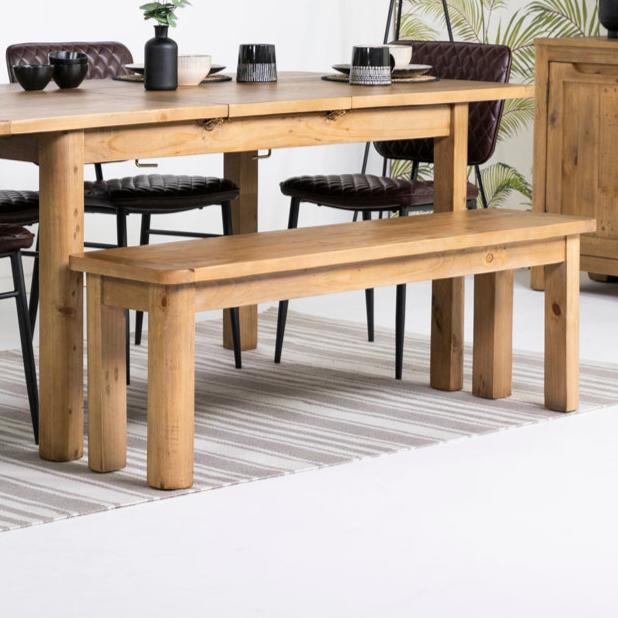
Exeter Dining Bench
Care instructions for wood dining benches
Wood needs gentle cleaning and steady protection because moisture, heat, and abrasion can affect the finish over time. For a wooden dining bench, dust regularly with a soft microfiber cloth to remove particles that may scratch the surface. When the bench needs more than dusting, use a barely damp cloth with mild soap, then follow with a dry cloth so water does not sit on the surface.
Avoid soaking the wood, spraying cleaner directly onto the bench, or using abrasive pads. Strong chemical cleaners may dull the finish, and silicone-heavy polishes can leave residue that builds up. If the bench has a natural, waxed, oiled, painted, or lacquered finish, follow the care instructions for that finish rather than assuming all wood responds the same way.
How to protect wood from daily wear
Protection is especially important on a kitchen bench or dining area seat where plates, cups, and serving dishes are nearby. Use placemats, runners, or cushions if the bench doubles as a serving surface or homework spot. Keep hot pans, wet glasses, and plant pots off the surface unless there is a protective barrier underneath.
To reduce long-term fading or drying, avoid placing a wooden dining bench in harsh direct sunlight for extended periods. If the room gets strong sun, rotate the bench occasionally or use window coverings during peak light. Maintain a stable indoor environment when possible, since extreme humidity swings can encourage wood movement.
How should upholstered dining benches be cleaned?
Upholstered benches should be cleaned by removing dry debris first, then treating spots carefully with the least amount of moisture needed. Vacuum the seat, back, seams, buttons, and piping with a soft brush attachment to lift crumbs, hair, and dust. For spills, blot with a clean white cloth from the outside of the spot inward, then use a fabric-appropriate cleaner only after testing it in a hidden place.
Fabric and leather-like materials can react differently to water and cleaning products. Some upholstery may tolerate a mild water-based solution, while other fabrics need solvent-based cleaning or professional care. If the bench has a manufacturer cleaning code or label, let that guide your method.
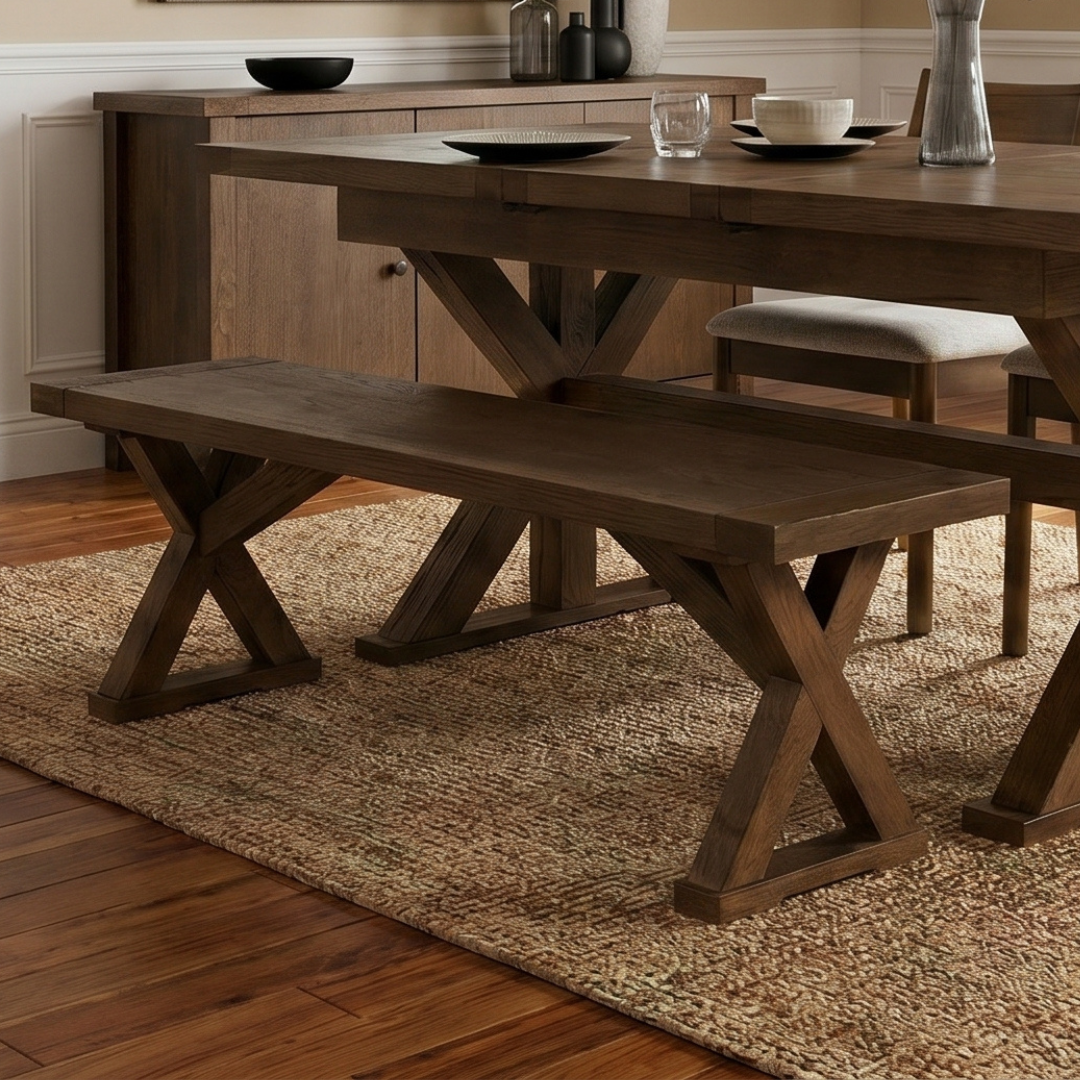
Quebec Oak Dining Bench
Upholstery spill response
-
Act quickly. Fresh spills are usually easier to manage than dried stains.
-
Blot, do not scrub. Scrubbing can push the stain deeper and roughen the fibers.
-
Use minimal liquid. Too much moisture can create rings, affect padding, or encourage odors.
-
Work gently. Repeat light applications rather than one aggressive treatment.
-
Let it dry fully. Improve airflow and avoid sitting on the area until it is dry.
For upholstered dining benches used daily, consider fabric protection if it is suitable for the material. Seat cushions can also help reduce wear in high-contact areas, especially on benches used by children or pets. Regular vacuuming is one of the easiest maintenance tips because it prevents grit from grinding into the fabric every time someone sits down.
Mixed material benches need balanced care
A mixed material dining bench may combine wood, metal, upholstery, cane, rattan, stone, or laminate, so one cleaning method rarely fits the whole piece. Clean each material separately and avoid letting products intended for one surface spread onto another. For example, a wood cleaner may not suit fabric, and an upholstery spray may leave residue on metal or finished wood.
Start by identifying the most delicate material on the bench and cleaning around it carefully. If the bench has an upholstered seat on a wooden frame, vacuum the fabric before wiping the frame so dust does not transfer back onto clean surfaces. If it has metal legs, dry them after cleaning nearby fabric or wood to help prevent spotting.
Practical approach for mixed materials
-
Wood frame with fabric seat: Vacuum first, spot-clean upholstery, then wipe and dry the wood.
-
Metal legs with wood seat: Dust both, use mild cleaner sparingly, and dry joints where moisture can collect.
-
Cane or woven panels: Use a soft brush or vacuum attachment, and avoid saturating the weave.
-
Painted or coated finishes: Use non-abrasive cloths and avoid harsh scrubbing that may dull the coating.
Stain prevention and surface protection
The best furniture cleaning guide is not only about removing messes; it is also about preventing damage before it happens. A dining bench benefits from small protective habits, especially if it is used multiple times a day. Felt pads under legs, floor glides, seat cushions, and washable throws can all reduce wear without changing how the bench functions.
Keep the bench away from radiator heat, damp walls, and areas where mops or wet shoes frequently touch the legs. If the bench is pushed under a dining table, check that the edge of the table is not repeatedly scraping the back or seat. In tighter spaces, lift the bench instead of dragging it to protect both the furniture and the floor.

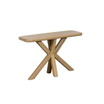
Tulsa Cross Leg Reclaimed Wood Bench
Common cleaning mistakes to avoid
Many dining bench problems come from using too much force, too much liquid, or the wrong product. Even durable furniture can be damaged by repeated harsh cleaning. A gentle routine usually produces better long-term results than occasional aggressive scrubbing.
Avoid these common mistakes:
-
Using bleach or ammonia unless the care label specifically allows it.
-
Letting water sit on wood, metal joints, or upholstery.
-
Scrubbing fabric stains in a circular motion until fibers fuzz.
-
Applying polish, oil, or conditioner to unknown finishes.
-
Using steam cleaners on materials that are not designed for heat and moisture.
-
Ignoring loose screws, wobbly legs, or worn floor protectors.
If a stain, odor, crack, or finish issue does not improve with gentle care, pause before trying stronger products. Professional cleaning or repair may be safer than experimenting, especially with delicate upholstery, vintage pieces, or specialty finishes.
A simple long-term maintenance plan
A dining bench does not need complicated upkeep, but it does need regular attention. Build care into the way you already use the dining area: wipe after meals, vacuum during weekly cleaning, and inspect the bench when you clean under the table. Small habits help protect the bench from the most common sources of damage: crumbs, spills, sunlight, moisture, and daily friction.
For wood, focus on dust control, quick spill cleanup, and finish-friendly products. For upholstered pieces, vacuum often and treat stains carefully. For mixed material benches, clean by material and keep moisture from seams, joints, and woven details. With the right routine, your table bench can remain a practical, comfortable, and attractive part of the dining space through everyday meals and special gatherings alike.


Leave a comment
This site is protected by hCaptcha and the hCaptcha Privacy Policy and Terms of Service apply.