

















When designing a restful sleeping space, striking the right balance between aesthetic appeal and everyday practicality is crucial. One of the most common furnishing dilemmas homeowners face is choosing between bedside cabinets and larger chests. Both serve distinct and essential purposes, but understanding how they work—either independently or together—can transform a cluttered, stressful room into a highly organised sanctuary.
If you are currently weighing up the merits of Bedside Cabinets vs Chests of Drawers, this guide will walk you through everything from space planning and ergonomic design to material choices, ensuring you make the best investment for your home.
The Primary Roles: Immediate Access vs High-Volume Storage
To the novice decorator, bedroom storage might just seem like a series of boxes and drawers. However, understanding the functional difference between nightstands and dressers (commonly referred to as chests of drawers in the UK) is the first step to a well-designed room.
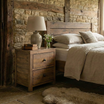
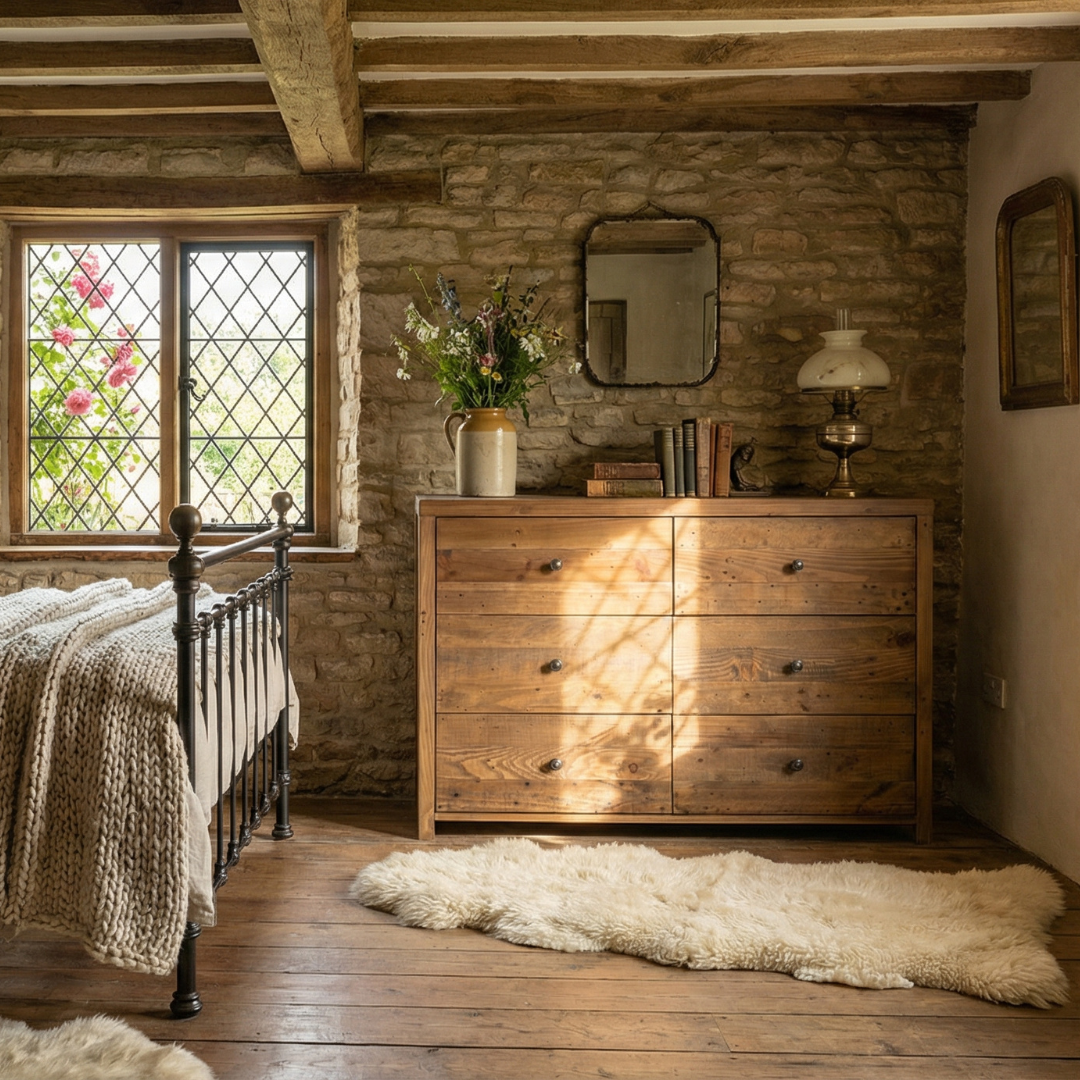
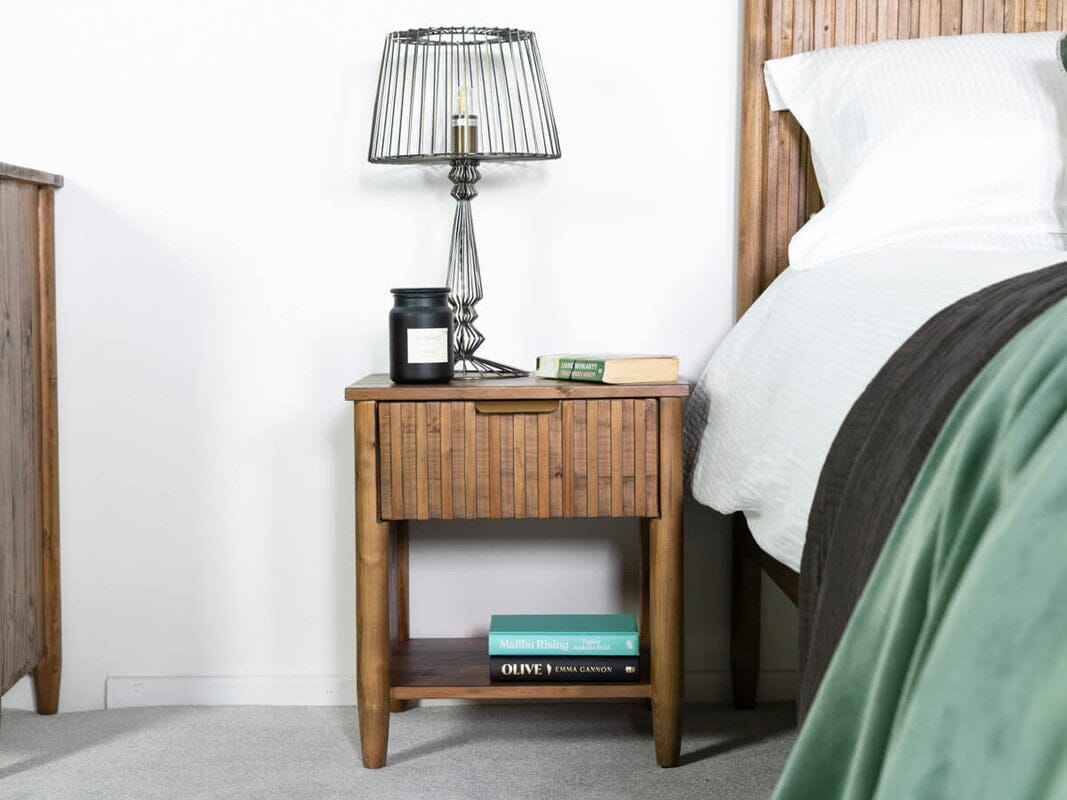
A bedside cabinet is designed for immediate, arms-reach convenience. It holds the items you need right before you fall asleep and the moment you wake up. Conversely, a chest of drawers is a high-volume workhorse, specifically designed to organise and hold folded garments.
When comparing the storage capacity of nightstands versus bureaus and large chests, the larger units naturally win out for clothing. But exactly how many drawers are needed for clothing storage? Generally, a standard three-to-five drawer chest is perfectly sufficient for a single adult's folded wardrobe, accommodating everything from chunky knit jumpers and denim jeans to t-shirts and undergarments. Bedside cabinets, on the other hand, only need one or two small drawers to stow away a book, reading glasses, and perhaps some hand cream.
Furthermore, technology has changed how we use our bedside furniture. Today, modern nightstands with integrated cable management allow you to neatly charge your smartphone, smartwatch, and tablet overnight, keeping unsightly wires entirely out of view.
Maximising Space and Room Layout
Creating a serene bedroom is just as much about empty space as it is about furniture. Finding effective bedroom storage solutions for small spaces requires strategic, thoughtful planning.
If your floor plan is particularly tight, you might want to consider a tallboy dresser for vertical space optimization. By building upwards rather than outwards, a tallboy provides a massive amount of storage while occupying a very small footprint on your bedroom floor.
When positioning these pieces, you must carefully account for the floor space requirements for opening drawers. A common mistake is cramming a large chest too close to the end of the bed. It is highly recommended to be precise about measuring clearance for bedroom furniture drawers. You should aim for an absolute minimum of 90 centimetres of clear space in front of any chest. This allows you to comfortably stand in front of the unit and pull the drawers fully open without knocking your knees or feeling trapped. Keeping these clearances in mind is vital when organizing bedroom furniture for better flow and movement.
Combining Functions: A Clever Space-Saving Hack
A frequent question posed by those with compact bedrooms is: can I use a small dresser as a bedside table?
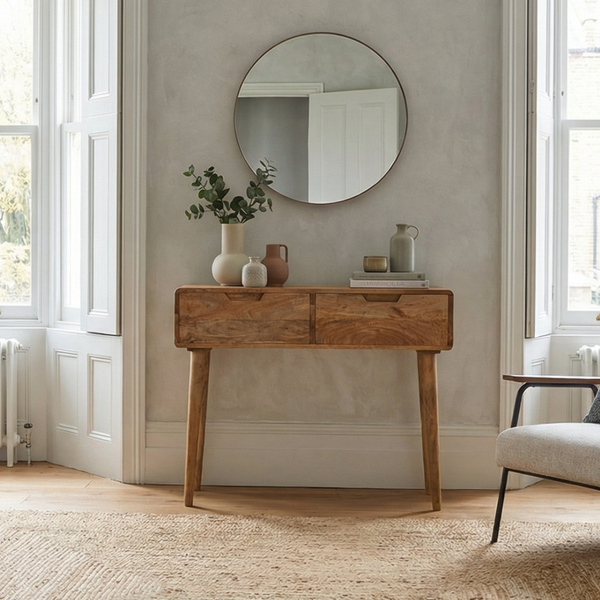
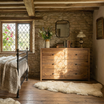
The answer is a resounding yes. Using a petite chest of drawers next to your bed is a fantastic way to double up on functionality. It beautifully frames the bed while offering deep storage for clothes, completely removing the need for a separate piece of furniture elsewhere in the room.
However, if you choose this route, you must factor in the ideal nightstand height relative to mattress height. For maximum comfort, the top of your bedside unit should sit roughly level with the top of your mattress, or perhaps just a few centimetres higher. Prioritising this ensures you are selecting ergonomic furniture for easy bedside access. There is nothing worse than having to awkwardly reach up high or bend down uncomfortably low to switch off your alarm clock in the dark.
Aesthetics, Materials, and Durability
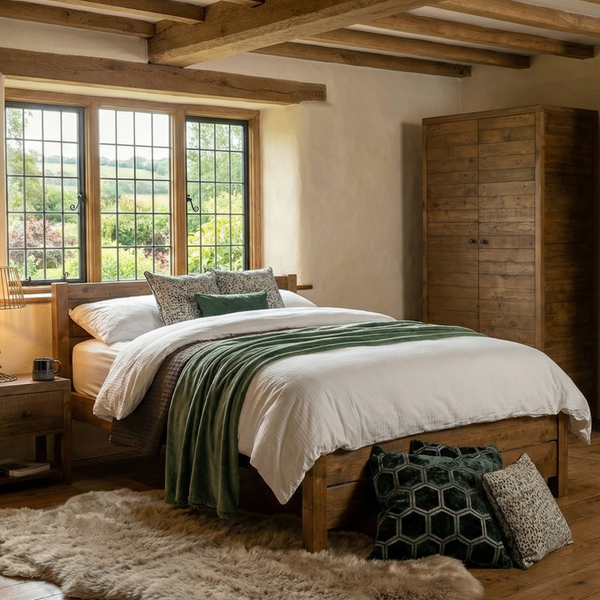
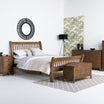
Your choice of storage furniture greatly influences the atmosphere of the room. Matching bedside tables with existing bedroom decor brings a cohesive, tailored, and traditional feel to the space. Alternatively, mixing textures—such as pairing sleek, painted bedside cabinets with a rustic, raw-wood chest of drawers—can add a layer of contemporary character and depth to your interior design.
Beyond looks, quality and longevity should be at the forefront of your mind. It is important to weigh up solid wood vs manufactured wood furniture durability.
-
Solid Wood: Pieces made from solid oak, pine, or walnut offer incredible longevity. They gracefully endure the daily wear and tear of heavily loaded drawers and often feature robust dovetail joints.
-
Manufactured Wood: MDF or particleboard units are often more budget-friendly and lighter to move. While perfectly suitable for lighter-use areas, they may show signs of wear and tear much quicker in a heavily utilised room.
Tailoring Furniture to the Room's Purpose
Your approach to storage should adapt depending on exactly who will be using the room. Evaluating furniture functionality for master vs guest rooms will save you both space and money.
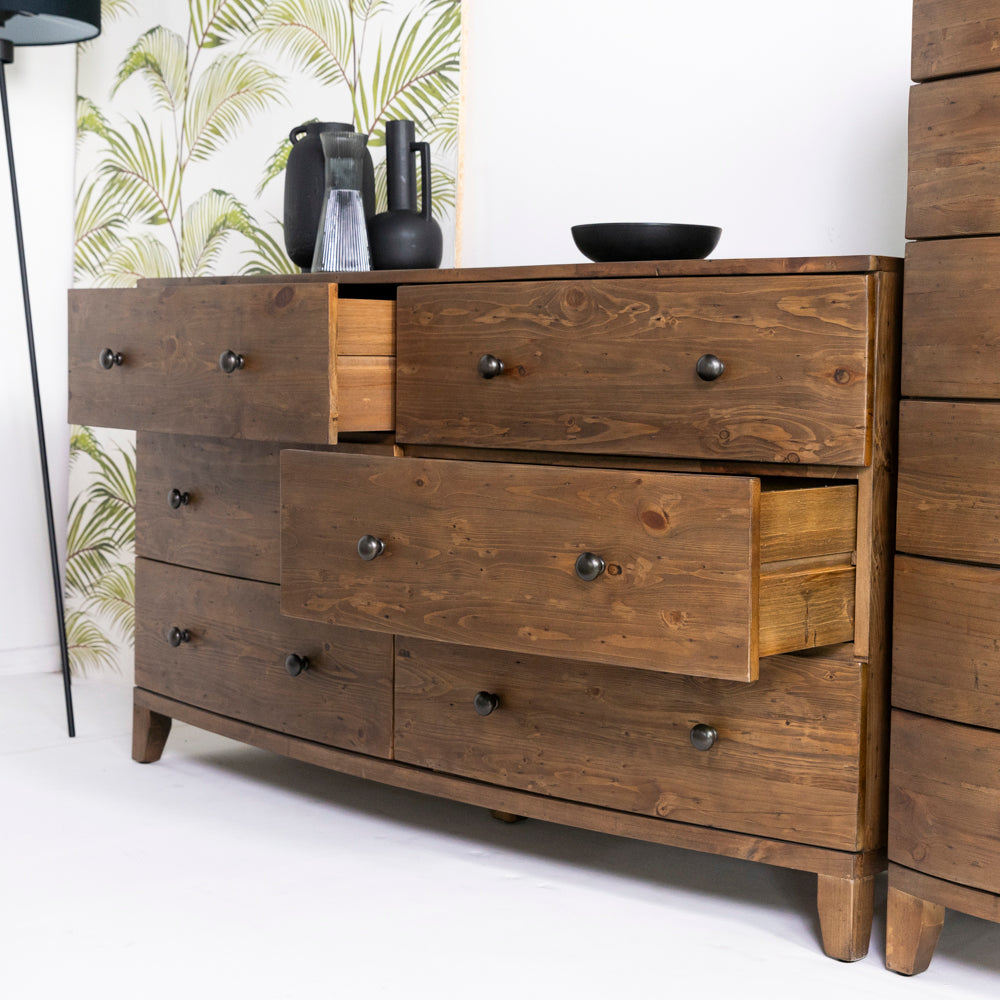
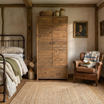
A master bedroom typically demands maximum storage—often requiring a wide chest of drawers, a tallboy, and two generously sized bedside cabinets for a couple. In contrast, a guest room is used infrequently. A single, slim bedside cabinet and a small three-drawer chest will easily suffice for weekend visitors living out of a weekend bag.
Essential Bedroom Organisation Tips
To tie your room together and keep your new furniture functioning perfectly, consider these practical bedroom storage ideas and bedroom organization tips:
-
Declutter your surfaces: Use small fabric drawer dividers inside your bedside cabinets. This stops smaller items like lip balm, earplugs, and charging cables from rolling around and creating a mess.
-
Rotate seasonally: Do not cram your chest of drawers full to the brim. Store thick winter jumpers in vacuum-sealed bags under the bed during the summer months to free up valuable drawer space.
-
Prioritise accessibility: Keep your everyday essentials (like socks) in the top drawers of your chest, and place heavier, rarely used items in the bottom drawers.
Final Thoughts
Ultimately, the debate of Bedside Cabinets vs Chests of Drawers isn't about deciding which piece of furniture is objectively better. It is about assessing your specific needs, the dimensions of your room, and your daily habits. By carefully considering drawer clearances, material durability, and ergonomic heights, you can curate a combination of storage furniture that looks beautiful, operates seamlessly, and keeps your bedroom beautifully clutter-free.

Leave a comment
This site is protected by hCaptcha and the hCaptcha Privacy Policy and Terms of Service apply.