
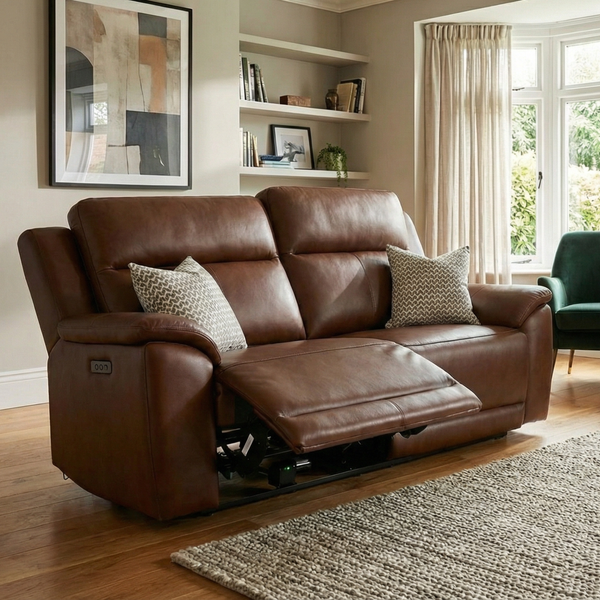
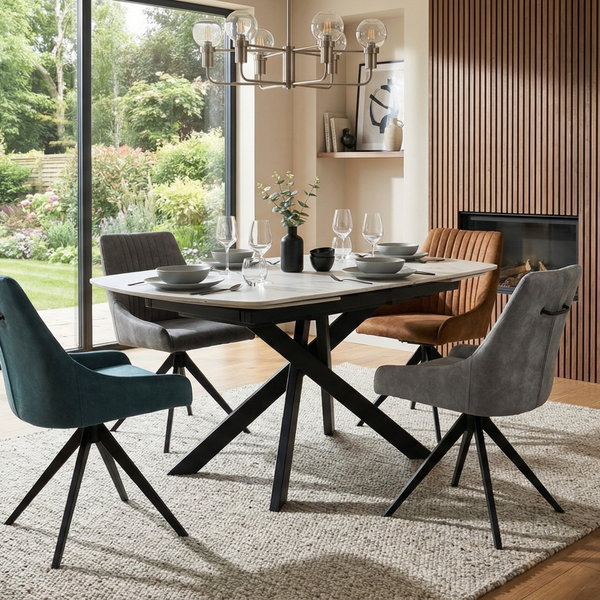
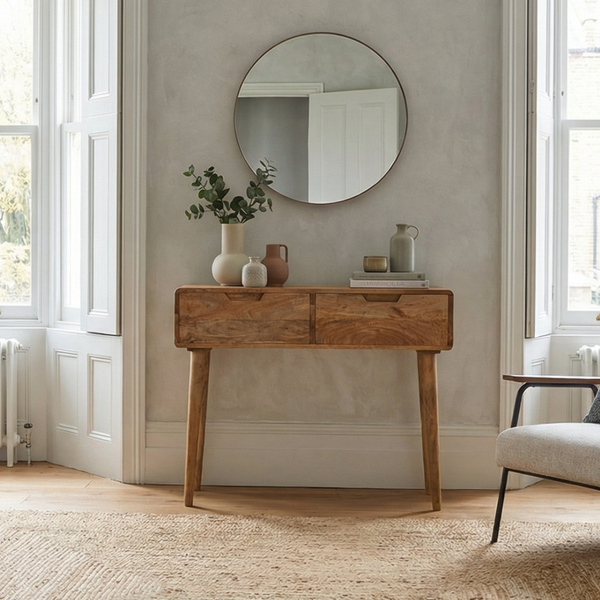
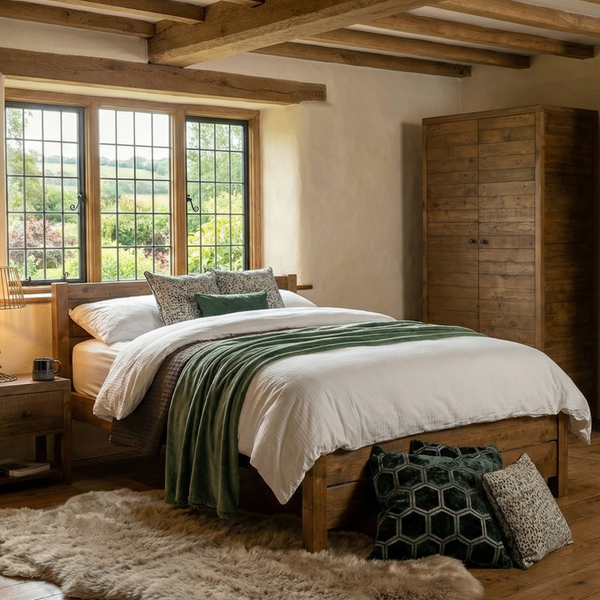








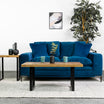
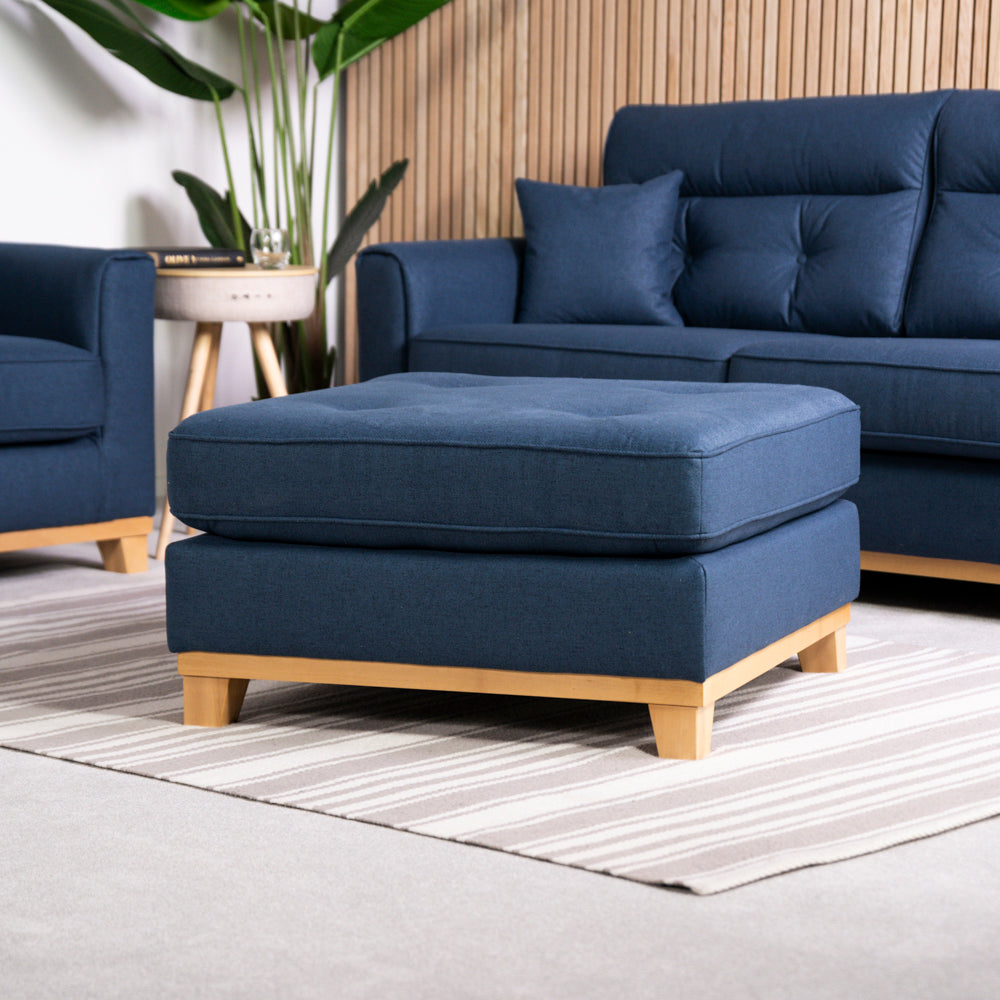
A well-chosen footstool can utterly transform a living room — adding comfort, character, and clever functionality all at once. Whether you're after a plush velvet perch to rest your feet after a long day, a sleek leather cube that doubles as a coffee table, or a generous storage ottoman to tame the clutter in your sitting room, there's a footstool out there to suit every home, style, and budget.
At FW Homestores, we know that buying a footstool is about far more than picking something that looks nice. It's about finding a piece that works hard for your space, coordinates beautifully with your existing furniture, and stands the test of everyday life. This complete footstools buying guide covers everything you need to know — from understanding the different types and materials to choosing the right size and styling it to perfection.
At FW Homestores, we know that buying a footstool is about far more than picking something that looks nice. It's about finding a piece that works hard for your space, coordinates beautifully with your existing furniture, and stands the test of everyday life. This complete footstools buying guide covers everything you need to know — from understanding the different types and materials to choosing the right size and styling it to perfection.
Understanding Footstools
What is a Footstool?
A footstool is a compact, low-seated piece of furniture designed primarily to support your feet whilst seated. Often upholstered, they serve as a comfortable extension of your sofa or armchair. Over the decades, footstools have evolved well beyond their original purpose — today, many double up as occasional seating, decorative centrepieces, and even practical storage solutions.
Difference Between Footstools and Ottomans
The terms 'footstool' and 'ottoman' are frequently used interchangeably, and in many cases they refer to the same item. Traditionally, an ottoman is the larger of the two — originating from Turkish furniture design and intended as both a seat and a footrest. Footstools tend to be smaller and are primarily used for leg support. In the contemporary British home, however, both are used to describe upholstered, legless or low-legged pieces that sit in front of sofas or armchairs. The key distinction, where one exists, is usually size and function: ottomans are often larger, with a flat top suitable for use as a coffee table, and many incorporate internal storage.
Types of Footstools
Leather Footstools
Leather footstools remain one of the most popular choices in British living rooms, and it's easy to see why. Leather is hardwearing, easy to wipe clean, and develops a lovely patina over time. Whether you opt for full-grain, genuine, or faux leather, these footstools bring a refined, timeless quality to any space. They pair particularly well with leather sofas or classic Chesterfield-style furniture, but equally add a sophisticated contrast to a fabric sofa in a neutral tone. If you have children or pets, leather (or high-quality faux leather) is an especially practical choice, as it resists stains and daily wear far better than many fabrics.
Upholstered Footstools

Upholstered footstools offer the greatest variety in terms of texture, colour, and style. From sumptuous velvet in jewel tones to tactile bouclé, linen, and herringbone tweeds, the fabric choices are virtually endless. Velvet footstools have surged in popularity in recent years, particularly in deep greens, navy, and burnt orange — all of which complement contemporary British interior trends beautifully. Linen and cotton options offer a more relaxed, Scandi-inspired aesthetic, whilst wool or tweed brings a classic country-house feel. When choosing an upholstered footstool, consider the fabric's durability alongside its looks: higher rub counts (measured in Martindale cycles) indicate better resistance to wear.
Wooden Footstools
Wooden footstools — whether fully crafted from timber or featuring solid wood legs with an upholstered top — bring a natural, grounded warmth to a room. Solid oak footstools in particular are a staple of the British interiors market, lending themselves equally to rustic farmhouse kitchens and more contemporary open-plan living spaces. Look for footstools with mortise-and-tenon joinery or sturdy dowelling for longevity, as the legs bear considerable weight over time.
Modern Footstools
Modern footstools prioritise clean lines, geometric shapes, and a stripped-back aesthetic. Often featuring hairpin or tapered legs in brass or black powder-coated steel, they suit mid-century modern or Scandi-inspired interiors particularly well. If your living room leans towards a contemporary scheme — think neutral palettes, minimalist shelving, and statement lighting — a sleek modern footstool in monochrome or muted tones will feel right at home.
Round Footstools
Round footstools — sometimes referred to as poufs or tub footstools — bring a softness and playfulness to a living room that rectangular or square options simply cannot. They work particularly well in rooms with lots of angular furniture, where the curved form offers visual relief. Smaller round footstools also function brilliantly as occasional seats for guests, whilst larger round ottomans can act as a central coffee table in a living space. Their shape makes them easy to move around without catching on other furniture, a practical advantage in busier households.
Functionality of Footstools

Footstools for Living Room
In the living room, a footstool serves a remarkable number of purposes beyond mere foot support. Many homeowners use a sturdy, flat-topped ottoman as a coffee table — simply add a tray to create a stable surface for drinks, books, or a candle arrangement. Others use footstools as flexible extra seating when guests arrive, pulling them out from beneath a console or from beside an armchair. In smaller living rooms where space is at a premium, a footstool that multi-tasks is an especially wise investment.
Positioning matters too. A footstool placed directly in front of a sofa creates a relaxed, reclined seating experience — perfect for evenings in front of the television. Positioned to the side of an armchair, it acts as a personal footrest for reading nooks and quieter corners of the room.
Positioning matters too. A footstool placed directly in front of a sofa creates a relaxed, reclined seating experience — perfect for evenings in front of the television. Positioned to the side of an armchair, it acts as a personal footrest for reading nooks and quieter corners of the room.
Benefits of Storage Footstools
Storage footstools are one of the most practical furniture investments for the modern British home. With living spaces often becoming smaller — particularly in flats and terraced houses — every piece of furniture is expected to earn its place. A storage ottoman or footstool with a hinged or removable lid provides a discreet home for blankets, board games, children's toys, remote controls, and all manner of living room clutter.
The concealed storage aspect also makes them particularly appealing in open-plan living areas, where visual tidiness is prized. Unlike a basket or box, a well-chosen storage footstool blends seamlessly into the room's aesthetic — nobody need know it's doing double duty.
The concealed storage aspect also makes them particularly appealing in open-plan living areas, where visual tidiness is prized. Unlike a basket or box, a well-chosen storage footstool blends seamlessly into the room's aesthetic — nobody need know it's doing double duty.
Styles of Footstools with Storage
Storage footstools come in a wide range of styles to suit different interiors. The classic rectangular Ottoman with a hinged top is the most common, offering generous internal capacity and a flat surface that can serve as a coffee table. Cube storage footstools are a popular choice for contemporary interiors, whilst tufted ottomans bring a more traditional, drawing-room feel. Some models feature a tray-top insert that lifts out to reveal the storage cavity below — the ideal solution if you want the flexibility of a coffee table surface alongside hidden storage.
Choosing the Right Size

Measuring for Your Space
Before purchasing a footstool, always measure your available floor space carefully. A common mistake is choosing a footstool that looks proportionate on a product page but overwhelms the room in reality — or conversely, one that appears lost in a larger space. As a general guideline, leave at least 40–50cm of clearance between the front of your sofa and the back of the footstool, to allow for comfortable movement around the room. For footstools used as coffee tables in front of a sofa, aim for a width no greater than two-thirds of the sofa's length to maintain visual balance.
Height is equally important. Ideally, your footstool should sit at approximately the same height as your sofa seat cushion — typically between 40cm and 50cm — so that your legs rest comfortably in a natural position. A footstool that is too low can strain the backs of your knees, whilst one that is too high may feel awkward.
Height is equally important. Ideally, your footstool should sit at approximately the same height as your sofa seat cushion — typically between 40cm and 50cm — so that your legs rest comfortably in a natural position. A footstool that is too low can strain the backs of your knees, whilst one that is too high may feel awkward.
Proportions with Other Furniture
Think about the scale of your footstool in relation to the other pieces in the room. A large sectional sofa calls for a generous ottoman to balance the visual weight — a small pouf would look entirely out of place. Equally, a compact armchair in a bijou sitting room is best served by a neat, modest footstool rather than an oversized storage ottoman that dominates the floor plan. Consider the height of nearby pieces, such as your sofa arms and side tables, to ensure the footstool sits harmoniously within the overall arrangement.
Style Matching
Should Your Footstool Match Your Sofa?
The short answer is: not necessarily. Whilst a matching footstool and sofa creates a cohesive, considered look — and many manufacturers offer footstools in the same fabric as their sofa ranges — a contrasting footstool can add far more personality and depth to a room. The key is to ensure the footstool relates to the sofa in some meaningful way, whether through a shared colour tone, complementary texture, or a consistent leg finish.
For instance, a grey fabric sofa pairs beautifully with a velvet footstool in a deep mustard or forest green — the contrast is intentional and striking. A classic Chesterfield in tan leather works well alongside a footstool in a rich plum fabric or a patterned tweed. If in doubt, choose a footstool that picks up a colour already present in your soft furnishings — your cushions, throws, or curtains — to create a pulled-together look without a perfectly matched set.
For instance, a grey fabric sofa pairs beautifully with a velvet footstool in a deep mustard or forest green — the contrast is intentional and striking. A classic Chesterfield in tan leather works well alongside a footstool in a rich plum fabric or a patterned tweed. If in doubt, choose a footstool that picks up a colour already present in your soft furnishings — your cushions, throws, or curtains — to create a pulled-together look without a perfectly matched set.
Integrating Footstools into Your Décor
Beyond the sofa pairing, think about how your footstool sits within the broader scheme of your room. In a neutral-toned living room, a boldly patterned or brightly coloured footstool can act as the room's focal point — performing a similar role to a statement cushion or a piece of artwork. In a more maximalist scheme, you may prefer a footstool that sits quietly in the background, echoing the upholstery of existing chairs without competing for attention.
Leg finish is another detail worth considering. Footstools with brass or gold legs add warmth and a touch of glamour — particularly popular in contemporary glam and Art Deco-inspired interiors. Dark walnut or oak legs suit Scandi and mid-century modern schemes, whilst painted or turned wooden legs in ivory or charcoal work well in traditional or classic British interiors. A consistent leg finish across your furniture — matching, for example, the legs on your sofa, coffee table, and sideboard — helps to unify the room even when upholstery choices vary.
Leg finish is another detail worth considering. Footstools with brass or gold legs add warmth and a touch of glamour — particularly popular in contemporary glam and Art Deco-inspired interiors. Dark walnut or oak legs suit Scandi and mid-century modern schemes, whilst painted or turned wooden legs in ivory or charcoal work well in traditional or classic British interiors. A consistent leg finish across your furniture — matching, for example, the legs on your sofa, coffee table, and sideboard — helps to unify the room even when upholstery choices vary.
Ready to find your perfect footstool? Browse the full collection at FW Homestores, where you'll find a carefully curated range of leather footstools, upholstered ottomans, storage footstools, and modern designs — all chosen to bring comfort and style to the British home.
FAQs on Footstools Buying Guide
What is the ideal height for a footstool?
The ideal height for a footstool is roughly level with, or very slightly lower than, the seat cushion of your sofa or armchair — typically between 40cm and 50cm. This ensures your legs rest comfortably without placing strain on your knees or hips. If you plan to use your footstool as a coffee table, a slightly higher model (around 45–50cm) may be more practical for placing drinks and books at a comfortable reach.
Can a footstool be used as a coffee table?
Absolutely — in fact, using a footstool as a coffee table is one of the most popular styling trends in British living rooms right now. For this purpose, choose a footstool with a firm, flat top (upholstered tops with a tray insert work particularly well) and ensure the height is broadly in line with the seat height of your sofa. Adding a decorative tray to the top creates a stable surface for drinks and accessories, and makes it easy to clear the space when you want to use the footstool purely as a footrest.
How do I clean an upholstered footstool?
The cleaning method will depend on the fabric. Most upholstered footstools come with a manufacturer's care label — always check this first. For general maintenance, regular vacuuming with an upholstery attachment helps to remove dust and debris. Spot-clean spills promptly with a clean, slightly damp cloth, blotting rather than rubbing to avoid spreading the stain. For deeper cleaning, a specialist fabric cleaner appropriate to the material (velvet, linen, wool, etc.) is advisable. Leather footstools should be wiped with a damp cloth and conditioned periodically with a suitable leather conditioner to keep the material supple.
What size storage footstool do I need?
The right size depends on two factors: your available floor space and how much you plan to store inside. As a starting point, measure the space in front of your sofa and allow at least 40cm of clearance for comfortable movement. A small storage cube (roughly 40x40cm) is ideal for one or two blankets and small accessories, whilst a larger rectangular ottoman (80cm or more in length) can accommodate bulkier items such as board games, magazines, or children's toys. Always check the internal dimensions as well as the external footprint before purchasing.
Should my footstool match my sofa exactly?
Matching your footstool exactly to your sofa creates a streamlined, formal look — but it is by no means compulsory. Many interior designers actively recommend choosing a contrasting footstool to add visual interest and personality to the room. The most important thing is that the two pieces feel connected, whether through a shared colour tone, a repeated texture, or a consistent leg finish. If you are unsure, choose a footstool that echoes a colour already present elsewhere in the room — in your cushions, rug, or curtains — for a cohesive result without a perfectly matched set.
Can a footstool be used as a coffee table?
Absolutely — in fact, using a footstool as a coffee table is one of the most popular styling trends in British living rooms right now. For this purpose, choose a footstool with a firm, flat top (upholstered tops with a tray insert work particularly well) and ensure the height is broadly in line with the seat height of your sofa. Adding a decorative tray to the top creates a stable surface for drinks and accessories, and makes it easy to clear the space when you want to use the footstool purely as a footrest.
How do I clean an upholstered footstool?
The cleaning method will depend on the fabric. Most upholstered footstools come with a manufacturer's care label — always check this first. For general maintenance, regular vacuuming with an upholstery attachment helps to remove dust and debris. Spot-clean spills promptly with a clean, slightly damp cloth, blotting rather than rubbing to avoid spreading the stain. For deeper cleaning, a specialist fabric cleaner appropriate to the material (velvet, linen, wool, etc.) is advisable. Leather footstools should be wiped with a damp cloth and conditioned periodically with a suitable leather conditioner to keep the material supple.
What size storage footstool do I need?
The right size depends on two factors: your available floor space and how much you plan to store inside. As a starting point, measure the space in front of your sofa and allow at least 40cm of clearance for comfortable movement. A small storage cube (roughly 40x40cm) is ideal for one or two blankets and small accessories, whilst a larger rectangular ottoman (80cm or more in length) can accommodate bulkier items such as board games, magazines, or children's toys. Always check the internal dimensions as well as the external footprint before purchasing.
Should my footstool match my sofa exactly?
Matching your footstool exactly to your sofa creates a streamlined, formal look — but it is by no means compulsory. Many interior designers actively recommend choosing a contrasting footstool to add visual interest and personality to the room. The most important thing is that the two pieces feel connected, whether through a shared colour tone, a repeated texture, or a consistent leg finish. If you are unsure, choose a footstool that echoes a colour already present elsewhere in the room — in your cushions, rug, or curtains — for a cohesive result without a perfectly matched set.

Leave a comment
This site is protected by hCaptcha and the hCaptcha Privacy Policy and Terms of Service apply.