






















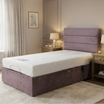
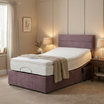
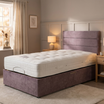




A good night's sleep begins long before you close your eyes — it starts the moment you choose your bed. With so many options available on the UK market today, from Ottoman storage frames to elegant upholstered headboards, buying a bed can feel overwhelming. Yet making the right choice pays dividends for years to come, both for your sleep quality and your bedroom's aesthetic.
The average person spends roughly a third of their life in bed, making it arguably the most important piece of furniture in your home. Whether you are furnishing a spacious master bedroom, a compact city flat, or a guest room that needs to work harder, this bed buying guide will walk you through every consideration — from sizes and frames to mattresses and accessories — so you can shop with confidence.
Bed Size Guide
Standard Bed Sizes in the UK
One of the first decisions you will make is choosing the right size. UK bed dimensions differ from European and American standards, so it is worth familiarising yourself before you shop.
| Bed Size | Dimensions (W x L) |
| Single | 90 cm x 190 cm |
| Small Double | 120 cm x 190 cm |
| Double | 135 cm x 190 cm |
| King Size | 150 cm x 200 cm |
| Super King | 180 cm x 200 cm |
A single bed suits children's rooms, guest rooms, and compact spaces. A small double, sometimes called a "three-quarter" bed, is an excellent compromise for a solo sleeper who wants a little extra room. The double remains the most popular choice for couples in smaller UK homes. A king size offers a generous sleeping surface ideal for couples, whilst the super king is the ultimate in luxury — provided your bedroom can accommodate it.
Custom Bed Sizes
Some manufacturers offer bespoke sizing for unusually shaped rooms or personal preferences. Custom beds take longer to produce and tend to cost more, but they can be worth it for loft conversions, attic rooms, or period properties with non-standard proportions.
Considerations for Bed Size Selection
Before settling on a size, measure your bedroom carefully. As a general rule, allow at least 60–70 cm of clearance on each accessible side of the bed for comfortable movement. Consider the scale of other furniture in the room — an oversized bed in a small bedroom can make the entire space feel cramped and uninviting.
Best Beds for Small Spaces
 Living in a compact home does not mean compromising on comfort. The UK's love of city apartments and terraced houses has driven enormous innovation in space-saving bed design.
Types of Beds Suitable for Small Spaces
Divan Beds with Drawers offer a more accessible storage solution. Available with two or four drawers on the sides, they keep essentials close at hand whilst maintaining a neat, streamlined profile.
Cabin Beds and Mid-Sleepers work brilliantly in children's rooms, incorporating a raised sleeping platform with usable space beneath — whether that is a desk, shelving, or additional storage.
Sofa Beds and Day Beds serve double duty, functioning as seating by day and a sleeping surface by night. Modern designs have improved enormously in comfort and style, making them a genuine option for studio flats and multipurpose rooms.
Space-Saving Features to Look For
- Built-in USB charging ports reduce the need for bedside tables
- Integrated headboard shelving eliminates the need for a separate shelf unit
- Low-profile frames create an illusion of more ceiling height
- Wall-mounted or fold-down beds (Murphy beds) offer the ultimate in flexibility
Tips for Maximising Bedroom Space
Bed Frame Buying Guide

Different Types of Bed Frames
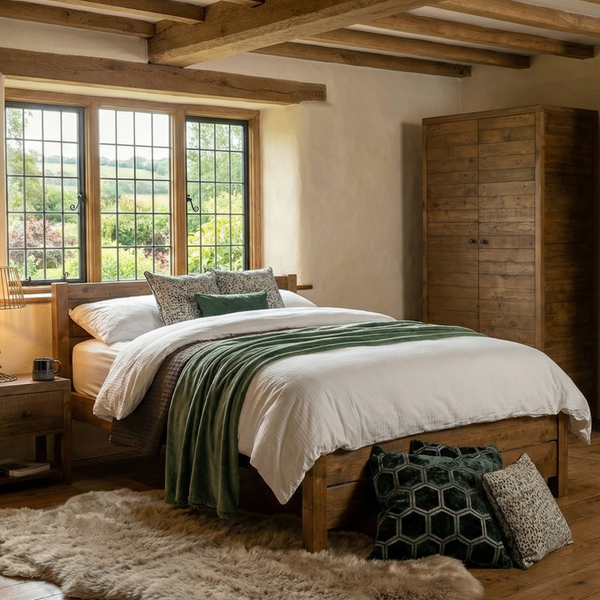
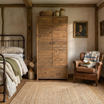
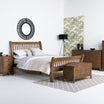
Wooden Bed Frames
Metal Bed Frames
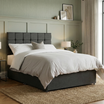
Upholstered Bed Frames
Factors to Consider When Choosing a Bed Frame
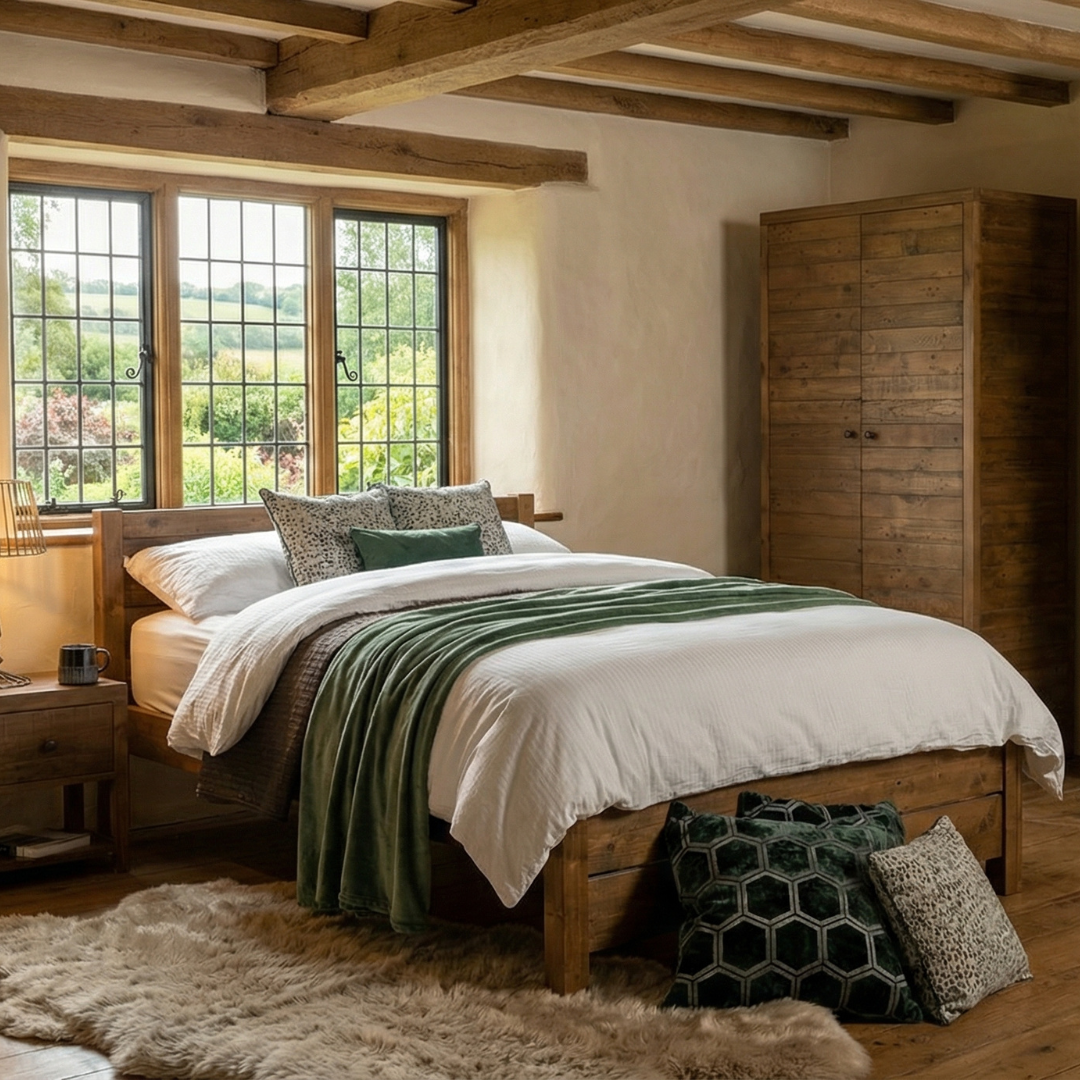
- Bedroom style: Match the frame material and finish to your existing décor
- Mattress compatibility: Ensure the base type — slatted, solid, or sprung — suits your chosen mattress
- Slat spacing: For pocket sprung or memory foam mattresses, slats no more than 6–7 cm apart are recommended
- Weight capacity: Check the manufacturer's guidelines, especially for heavier mattresses or shared use
- Assembly: Consider whether you are comfortable with flat-pack assembly or whether you would prefer a delivered-and-assembled service
Additional Accessories and Considerations
 Bedding Essentials
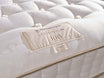
Mattress Selection Tips
- Support: Choose a firmness level suited to your sleeping position. Side sleepers typically benefit from a medium to soft feel; back and front sleepers generally prefer medium to firm support.
- Mattress type: Pocket sprung mattresses offer excellent support and minimise motion transfer — ideal for couples. Memory foam contours to the body, whilst hybrid mattresses combine the benefits of both.
- Size compatibility: Always match the mattress precisely to the frame size.
- Trial period: Many UK retailers now offer sleep trials of 30–100 nights, allowing you to return the mattress if it is not right for you.
Headboards and Their Impact
Conclusion
At FW Homestores, we believe that everyone deserves a bedroom they love coming home to. Whether you are drawn to the timeless warmth of a solid oak frame, the chic softness of a velvet upholstered bed, or the clever practicality of an Ottoman storage base, our carefully curated collection has something to suit every home, style, and budget across the UK.
Sleep well — it all starts with the right bed.
FAQs on Bed Buying Guide
The double bed (135 cm x 190 cm) remains the most popular choice in the UK, offering a comfortable sleeping surface for couples whilst fitting neatly into most standard British bedrooms.
Q: How long should a bed frame last?
A high-quality bed frame, properly maintained, should last between 10 and 20 years. Solid wood and metal frames tend to have the longest lifespan. It is worth investing in a quality frame, as it will support your mattress — and your sleep — for many years.
Q: Can I use any mattress with any bed frame?
Not necessarily. Divan bases work best with most mattress types, but slatted frames require careful consideration. Memory foam and latex mattresses need closely spaced slats (no more than 6–7 cm apart) for adequate support. Always check the mattress manufacturer's recommendations before purchasing a frame.
Q: What is the best bed type for a small bedroom?
Ottoman beds and divan beds with storage drawers are widely considered the best options for small bedrooms, as they maximise under-bed space without adding extra furniture. A single or small double size will also help the room feel more proportionate.
Q: How do I know if an upholstered bed is right for me?
If you value a soft, luxurious aesthetic and enjoy sitting up in bed to read or watch television, an upholstered frame is an excellent choice. Look for removable or easy-to-clean fabric options if you have children or pets, and choose a colour that complements your existing bedroom palette.

Leave a comment
This site is protected by hCaptcha and the hCaptcha Privacy Policy and Terms of Service apply.