

























































A well-chosen leather sofa is more than a place to sit. It becomes the warm, handsome centre of the room: a spot for Sunday reading, after-school lounging, evening entertaining, and quiet cups of tea. With the right care, leather develops character without looking tired — softening gently, holding its shape beautifully, and gaining that lived-in richness we love in a thoughtfully furnished home.
If you have ever wondered how to care for leather sofa upholstery without overcomplicating things, the good news is that the best routine is simple. A little regular attention, the correct leather care products, and a few sensible habits will help your leather couch look fresh for years.
Step 1: Know what type of leather you have
Before you reach for a cloth or conditioner, check the manufacturer’s care instructions. Different finishes respond differently to moisture, heat, and cleaning products.
Common leather types include:
-
Protected or pigmented leather, often used for family-friendly sofas because it has a surface coating that helps resist everyday marks.
-
Aniline or semi-aniline leather, which feels beautifully natural but may be more absorbent and sensitive to spills.
-
Full grain leather, the highest-quality hide surface, prized for its natural markings, strength, and elegant ageing.
-
Corrected grain or coated leather, designed for a more uniform look and usually easier day to day.
A full grain leather sofa may show natural character marks and develop a rich patina over time. A genuine leather sofa can also be wonderfully durable, but the finish will influence how it should be cleaned and conditioned. When in doubt, test any product on a hidden area first and allow it to dry completely before using it more widely.
Step 2: Build a simple weekly dusting routine
Dust may seem harmless, but over time it can settle into seams and gently dull the surface of a real leather sofa. Weekly dusting keeps the finish looking clear and prevents tiny particles from acting like fine grit.
Here’s how to do it:
-
Use a soft, dry microfibre cloth.
-
Wipe across seats, arms, backs, and headrests.
-
Gently lift cushions where possible and remove crumbs from creases.
-
Use a vacuum cleaner with a soft brush attachment for seams and corners.
-
Avoid pressing hard or dragging sharp nozzles across the leather.
This quick habit is one of the most effective maintenance tips because it stops dirt from building up before it becomes visible. It also gives you a regular chance to spot small marks early.

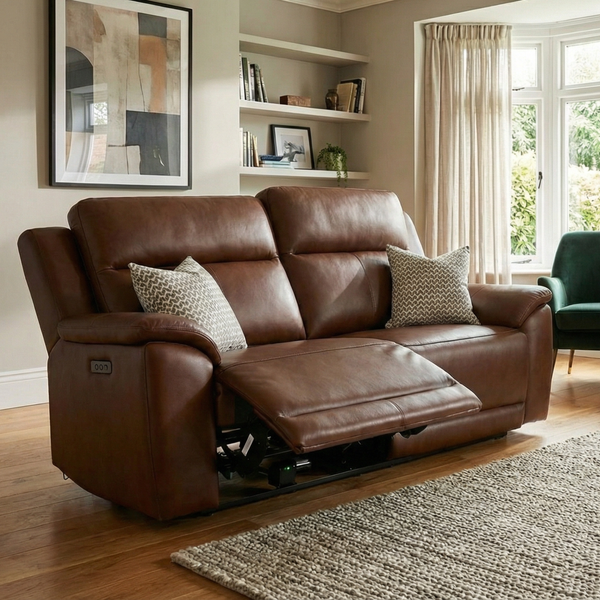
Medici 3 Seater Leather Recliner Sofa
Step 3: Clean lightly every month
If you are asking how to clean a leather sofa for everyday upkeep, think gentle rather than aggressive. Leather does not need soaking, scrubbing, or harsh detergents. In fact, too much moisture can leave marks or affect the finish.
For a monthly refresh:
-
Dust the sofa first.
-
Dampen a clean cloth with distilled water or cooled boiled water.
-
Wring it out thoroughly so it is only slightly damp.
-
Wipe the leather in small sections.
-
Follow with a dry cloth to remove any surface moisture.
-
Let the sofa air dry naturally, away from direct heat.
Never use bleach, washing-up liquid, baby wipes, all-purpose sprays, or abrasive sponges unless your sofa’s own care guide specifically allows them. These can strip protective finishes, cause patchiness, or leave residue that attracts more dirt.
For a deeper clean, choose leather-safe cleaners made for furniture, not car interiors or shoes. Good leather care products are designed to respect the natural flexibility of upholstery leather while lifting light grime.
Step 4: Deal with spills straight away
Life happens. Coffee tips, children wander in with juice, and a glass of wine can find its way onto the armrest during a lively evening. The secret is to act calmly and quickly.
Use this spill routine:
-
Blot, don’t rub. Use a clean, dry cloth or kitchen towel to absorb the liquid.
-
Work from the outside in. This helps stop the spill spreading.
-
Avoid flooding the area. Do not pour water onto the mark.
-
Use a barely damp cloth if needed. Gently lift any remaining residue.
-
Dry immediately. Pat with a clean cloth and allow the area to air dry.
For greasy spills, blot first and avoid adding water straight away, as oil may spread. Some marks will fade as the leather absorbs and releases natural oils, but stubborn stains should be handled by a leather specialist. It is always better to seek advice than to risk over-cleaning one patch and creating a pale or shiny spot.
Step 5: Condition your leather on a sensible schedule
Leather is a natural material, and like skin, it can dry out when exposed to sunlight, heat, and everyday use. Conditioning helps maintain suppleness and reduce the chance of cracking.
A good general schedule is:
-
Every 6 months for most leather sofas in average household conditions.
-
Every 3 to 4 months if the room is sunny, warm, or heavily used.
-
Once a year for lightly used sofas in cooler, shaded rooms, if the leather still feels soft and nourished.
Always follow the conditioner’s instructions. Apply a small amount with a soft cloth, working it in gently and evenly. Less is usually more. Too much conditioner can leave the surface sticky or attract dust.
Before conditioning the whole piece, test the product on a hidden section. Wait for the recommended drying time and check for any change in colour, sheen, or texture. This is especially important for aniline, semi-aniline, or full grain leather sofa designs, where natural finishes can be more responsive.
Step 6: Protect your sofa from UV light
Sunlight can be glorious in a living room, but direct UV exposure is one of leather’s quiet enemies. Over time, it may fade colour, dry the surface, and make the leather feel less supple.
To protect your sofa:
-
Position it away from direct sunlight where possible.
-
Use curtains, blinds, or UV-filtering window film in bright rooms.
-
Rotate cushions if your sofa design allows it.
-
Keep the sofa at least a little distance from radiators, fires, and heating vents.
-
Condition more regularly if the room gets strong afternoon sun.
At FW Homestores, we often think of furniture placement as part of the design story. A leather sofa looks beautiful when it anchors a space, but it should not have to battle harsh heat or sun every day. Giving it the right position helps preserve both comfort and colour.

New Hampshire 2 Seater Leather Power Recliner Sofa
Step 7: Prevent scratches and pressure marks
Leather is durable, but it is not indestructible. Buckles, pet claws, keys, studs, and sharp toys can all leave marks. Some light scuffs may blend into the natural patina, but deeper scratches are harder to disguise.
Helpful habits include:
-
Keeping pet claws trimmed.
-
Avoiding sitting on the sofa with keys or tools in pockets.
-
Using soft throws in high-use areas, especially for pets.
-
Lifting items rather than dragging them across the surface.
-
Plumping and rotating cushions to spread wear evenly.
If a scratch appears, do not panic. Lightly buffing with a clean, dry cloth may soften the look. For deeper marks, use a suitable leather repair product or ask a professional for guidance.
Step 8: Keep the room conditions leather-friendly
Leather prefers stable conditions. Very dry air can encourage cracking, while damp rooms can create musty smells or affect the sofa’s structure.
Aim for a comfortable, well-ventilated room. Avoid placing your sofa hard against an outside wall if the area is prone to condensation. If your home becomes very dry in winter, a balanced indoor humidity level can help both your furniture and your own comfort.
This is one of those understated maintenance tips that makes a real difference over time. The better the environment, the less hard your cleaning and conditioning routine has to work.
Step 9: Use the right products, not the most products
When learning how to take care of leather sofa upholstery, it can be tempting to buy every cream, spray, and polish available. A more considered approach is better.
A simple leather care kit should include:
-
A soft microfibre cloth for dusting.
-
A leather-safe cleaner suited to your sofa’s finish.
-
A quality leather conditioner.
-
A soft brush attachment for vacuuming seams.
-
The original care guide, kept somewhere easy to find.
Avoid silicone-heavy polishes, waxes not designed for upholstery, and strong fragranced cleaners. Your aim is to nourish and protect the leather while preserving its natural handle and appearance.
Step 10: Know when to call a specialist
Some situations need expert help. Ink, dye transfer from dark clothing, large oil stains, pet accidents, and widespread fading are best assessed professionally. Trying several home remedies can make the problem worse and may affect any warranty or care plan.
Call a leather technician if:
-
A stain remains after gentle blotting.
-
The colour has lifted or changed.
-
The leather feels sticky, brittle, or cracked.
-
There is a tear, puncture, or deep scratch.
-
You are unsure what type of leather you own.
Professional cleaning can also be a wise choice every few years for a much-loved family sofa, particularly in busy homes.

Wesley 3 Seater Power Leather Recliner Sofa
A simple leather sofa care routine to remember
For everyday confidence, keep this rhythm in mind:
-
Weekly: Dust and vacuum seams gently.
-
Monthly: Wipe with a barely damp cloth if needed, then dry.
-
Every 3 to 6 months: Condition according to use, sunlight, and room warmth.
-
Immediately after spills: Blot carefully and avoid rubbing.
-
All year round: Protect from direct UV light and strong heat.
Caring for a leather couch should feel less like a chore and more like preserving something special. With thoughtful cleaning, regular conditioning, and a little attention to sunlight and placement, your sofa can stay inviting, elegant, and beautifully at home.
If you are choosing a new genuine leather sofa or looking for the right leather care products, FW Homestores can help you find pieces and care essentials that suit your space, your style, and the way you live.



Leave a comment
This site is protected by hCaptcha and the hCaptcha Privacy Policy and Terms of Service apply.