








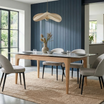

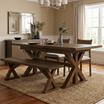
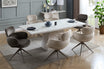

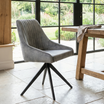




Whether you are furnishing a new home or refreshing a tired dining space, choosing the right table is one of the most important decisions you will make. Ceramic dining tables have surged in popularity across British homes — and for good reason. They offer a compelling combination of durability, style, and low-maintenance living that suits today's busy households. This ceramic dining tables buying guide walks you through everything you need to know before making your investment.
Understanding High-Quality Ceramic Materials
Not all ceramic is created equal. The quality of the material directly determines how your table performs over years of daily use, so understanding what you are buying is essential.
Benefits of High-Quality Ceramic
Premium ceramic tabletops are typically crafted from sintered stone or porcelain, fired at extraordinarily high temperatures to produce a surface that is remarkably hard, non-porous, and resistant to heat, scratches, and stains. Unlike many natural materials, high-quality ceramic will not absorb liquids, making it highly hygienic — a significant advantage for families with young children.
Ceramic is also UV-stable, meaning it will not fade or discolour when positioned near windows or in conservatories, where sunlight exposure is a constant concern. For British homes, where natural light is cherished and maximised, this is a practical benefit not to be overlooked.
How to Identify Quality Ceramic
When assessing a ceramic dining table, look for a thickness of at least 6mm — premium slabs often range between 6mm and 12mm. Run your fingers across the surface; it should feel completely uniform without pits or rough patches. Check the edges: neatly finished, bevelled, or squared edges signal careful craftsmanship. Always ask whether the ceramic is full-body or surface-only; full-body ceramic carries its colour and pattern throughout the entire slab, making chips far less visible should they occur.
Exploring Different Styles of Ceramic Dining Tables

Ceramic's versatility is one of its greatest strengths. It adapts beautifully to a wide range of interior styles.
Modern and Minimalist Ceramic Dining Table Design
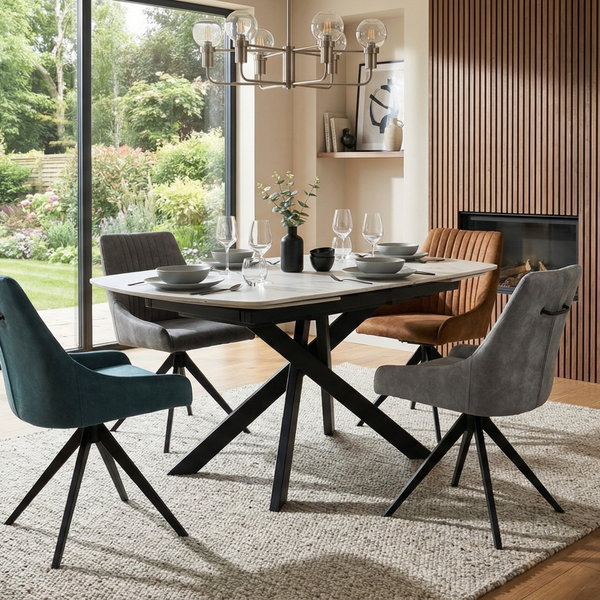
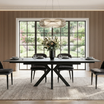
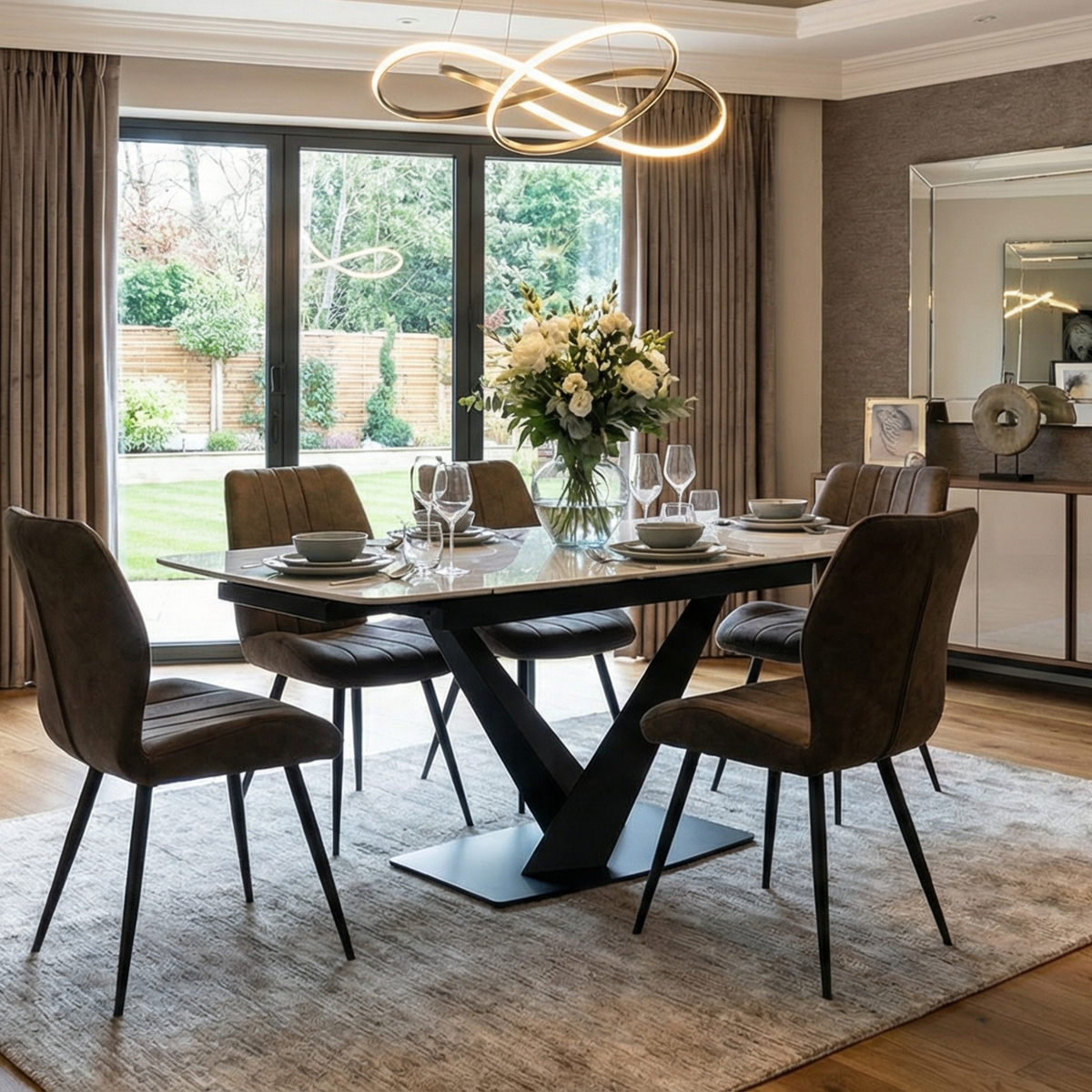
For contemporary British interiors, a minimalist ceramic dining table design is an ideal choice. Think clean lines, slender metal legs — often in brushed brass, matte black, or polished steel — and a tabletop in cool tones such as concrete grey, arctic white, or soft off-white. These tables act as a quiet anchor in open-plan living spaces, allowing surrounding furniture and art to take centre stage.
Pairing a minimalist ceramic table with upholstered dining chairs in boucle or velvet introduces tactile contrast that elevates the room without cluttering it visually.
Rustic and Traditional Options
Ceramic dining tables are not exclusively the domain of modern interiors. Many manufacturers now produce tables that replicate the warm, aged character of terracotta, travertine, or reclaimed stone — all in the practical body of ceramic. These work beautifully in cottage kitchens, farmhouse dining rooms, or any space that leans into natural textures and earthy colour palettes.
A ceramic top in a sandstone or warm taupe finish, set on solid oak or walnut legs, bridges the gap between traditional and contemporary with considerable elegance.
Ceramic vs. Marble Dining Tables: A Detailed Comparison

Marble has long been the aspirational choice for premium dining tables, but ceramic is increasingly challenging its dominance. Here is how the two materials compare.
Aesthetics and Design Considerations
Marble's appeal lies in its authenticity — each slab is utterly unique, with natural veining that cannot be precisely replicated. Ceramic, however, has advanced significantly and can now mimic marble with impressive accuracy whilst offering greater visual consistency across a set of matching pieces.
If you desire a cohesive, matched aesthetic — particularly when coordinating with other furniture — ceramic gives you predictability that natural marble simply cannot.
Durability and Maintenance Differences
This is where ceramic pulls decisively ahead. Marble is a porous natural stone that requires regular sealing to prevent staining from wine, oils, and acidic foods. It is also susceptible to etching from everyday acids like lemon juice or vinegar — a genuine concern in a working kitchen or dining room. Ceramic, by contrast, requires no sealing, resists staining without any treatment, and can be wiped clean effortlessly with a damp cloth.
For busy British households, ceramic's maintenance demands are far more realistic.
Cost Analysis
Genuine marble dining tables typically command a significantly higher price, particularly for larger slabs of high-grade stone. Ceramic offers a comparable — and in many cases superior — aesthetic at a more accessible price point, making it the more sensible investment for most buyers.
Ceramic vs. Wood Dining Tables: Making the Right Choice
 Wood remains the classic choice for British dining rooms, carrying warmth and tradition that ceramic cannot fully replicate. Yet the two materials serve quite different needs.
Style Compatibility in Interior Design
Solid wood dining tables bring organic warmth and a sense of heritage that suits traditional, Scandi, or mid-century interiors particularly well. Ceramic dining table interior design, by contrast, lends itself to contemporary, industrial, or transitional schemes where a cleaner, more architectural look is desired.
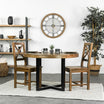
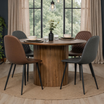
The good news is that many ceramic tables now combine ceramic tops with wooden bases, offering the best of both worlds — the practicality of ceramic with the warmth of natural timber.
Maintenance and Care for Each Material
Wood requires periodic oiling or waxing to maintain its appearance, and it can be susceptible to water rings, scratches, and warping in humid environments. Ceramic demands almost nothing. This makes ceramic an especially wise choice for open-plan kitchen-diners, where the table is exposed to cooking steam, splashes, and the general vigour of daily family life.
Ceramic Dining Tables Décor Ideas

Choosing the table is just the beginning. How you style it will determine whether your dining space feels considered and inviting or merely functional.
Accessorising Your Table for Impact
A ceramic dining table provides a beautifully neutral canvas for seasonal and everyday styling. Consider a sculptural centrepiece — a cluster of organic candles, a textured ceramic vase with dried pampas grass, or a low bowl of seasonal fruit — that draws the eye without obscuring conversation across the table.
Table runners in natural linen or textured cotton add warmth to an otherwise cool ceramic surface. For formal occasions, layering with placemats in contrasting materials — rattan, leather, or woven seagrass — creates visual interest whilst protecting the tabletop.
Setting the Perfect Dining Atmosphere
Lighting is transformative. A statement pendant light positioned directly above your ceramic dining table — ideally hung at approximately 70–80cm above the tabletop — creates an intimate pool of light that makes meals feel like an occasion. In larger dining rooms, a row of three pendants above a rectangular table is both practical and visually striking.
For a cohesive ceramic dining table interior design scheme, carry the palette of the tabletop into your wider room choices: soft greys and whites pair effortlessly with pale walls and natural flooring, whilst warmer terracotta tones call for rich greens, amber, and burnished metals.
Conclusion: Finding Your Ideal Ceramic Dining Table
A ceramic dining table is a long-term investment in both style and practicality. It offers the beauty of natural stone without the demanding upkeep, the versatility to suit almost any interior aesthetic, and the durability to withstand decades of family life. Whether you are drawn to a sleek minimalist design, a marble-effect showpiece, or a rustic warm-toned slab, there is a ceramic table to match your vision.
At FW Homestores, our curated collection spans a wide range of sizes, finishes, and styles — all crafted from high-quality ceramic materials. Explore our range in-store or online to find the table that will become the heart of your home.
FAQs on Ceramic Dining Tables Buying Guide
1. Are ceramic dining tables scratch-resistant?
Yes. High-quality ceramic is one of the most scratch-resistant materials available for dining tables. Everyday cutlery and crockery will not mark the surface, though it is always advisable to use placemats for heavy or very sharp items.
2. Can a ceramic dining table withstand heat?
Ceramic is highly heat-resistant and can generally tolerate hot dishes placed directly on the surface. However, to preserve the finish over time and protect any sealant on the base material, using trivets or heat mats for very hot cookware is recommended.
3. How do I clean and maintain a ceramic dining table?
Simply wipe it down with a damp cloth and a mild, non-abrasive cleaning product. Unlike marble or wood, ceramic requires no specialist treatments, sealing, or periodic conditioning — making it one of the easiest dining table materials to maintain.
4. Is a ceramic dining table better than marble?
For most households, yes. Ceramic replicates the aesthetic of marble whilst offering superior stain resistance, zero maintenance requirements, and greater durability at a comparable or lower price. Marble retains an authenticity that some buyers prefer, but ceramic is the more practical choice for everyday living.
5. What size ceramic dining table do I need?
As a general rule, allow approximately 60cm of table width per person for comfortable seating. For a family of four, a table of at least 120cm × 80cm is recommended; for six, aim for 180cm × 90cm or larger. Always measure your dining room and leave at least 90cm around the table to allow chairs to be pulled out comfortably.


Leave a comment
This site is protected by hCaptcha and the hCaptcha Privacy Policy and Terms of Service apply.